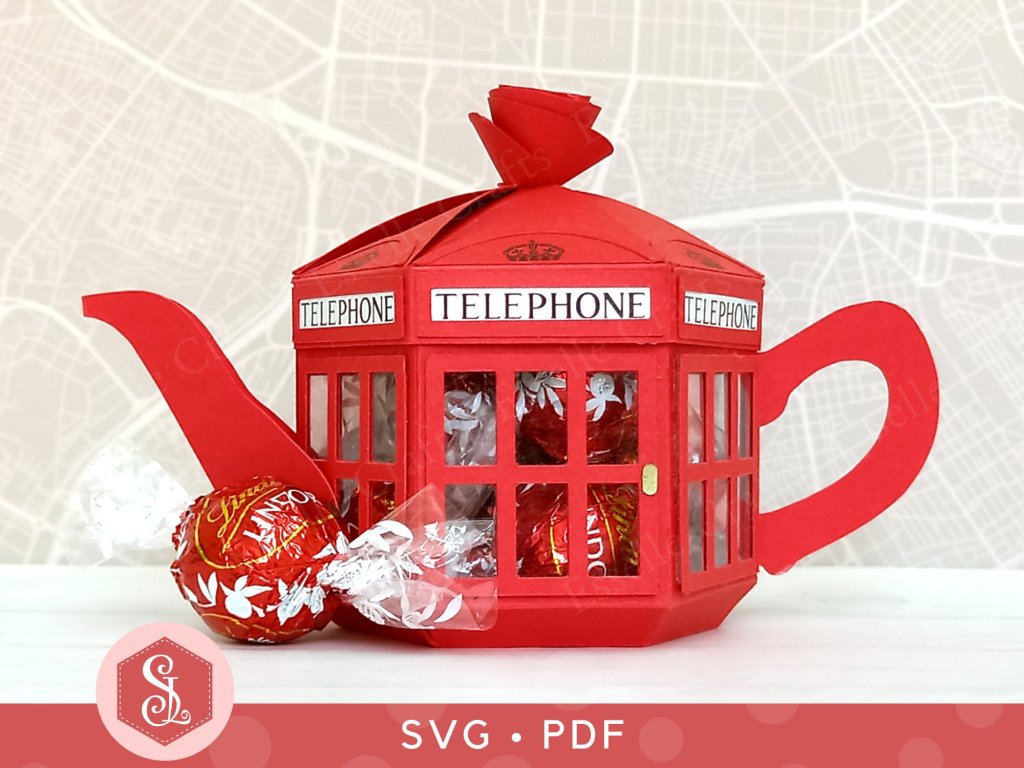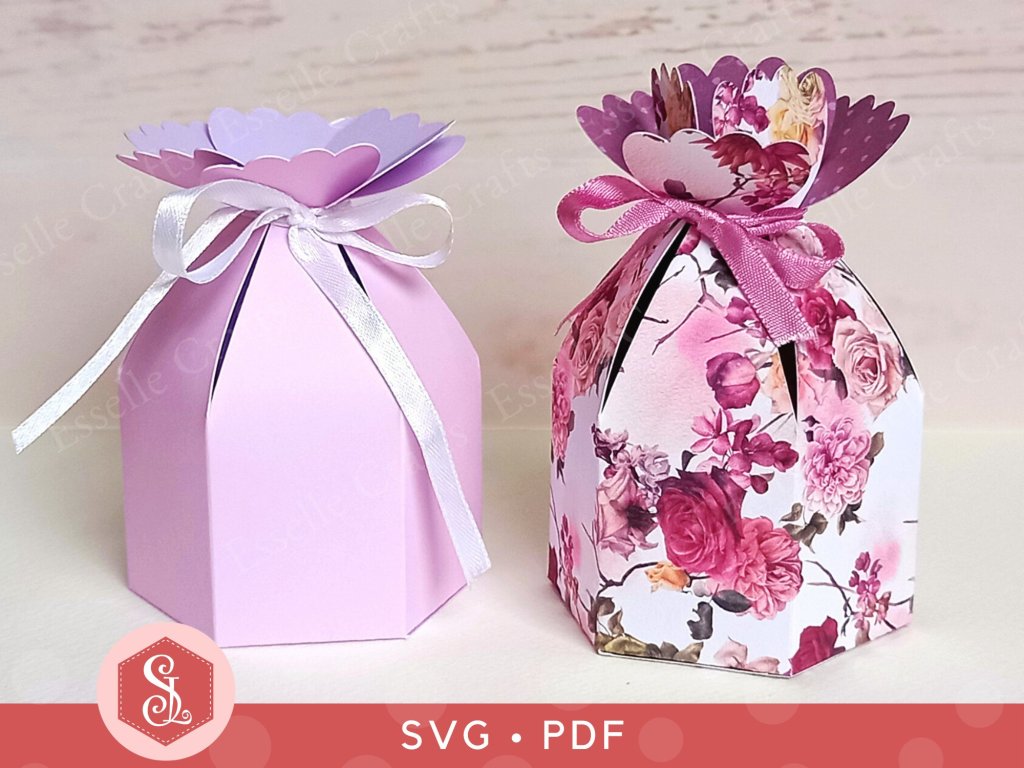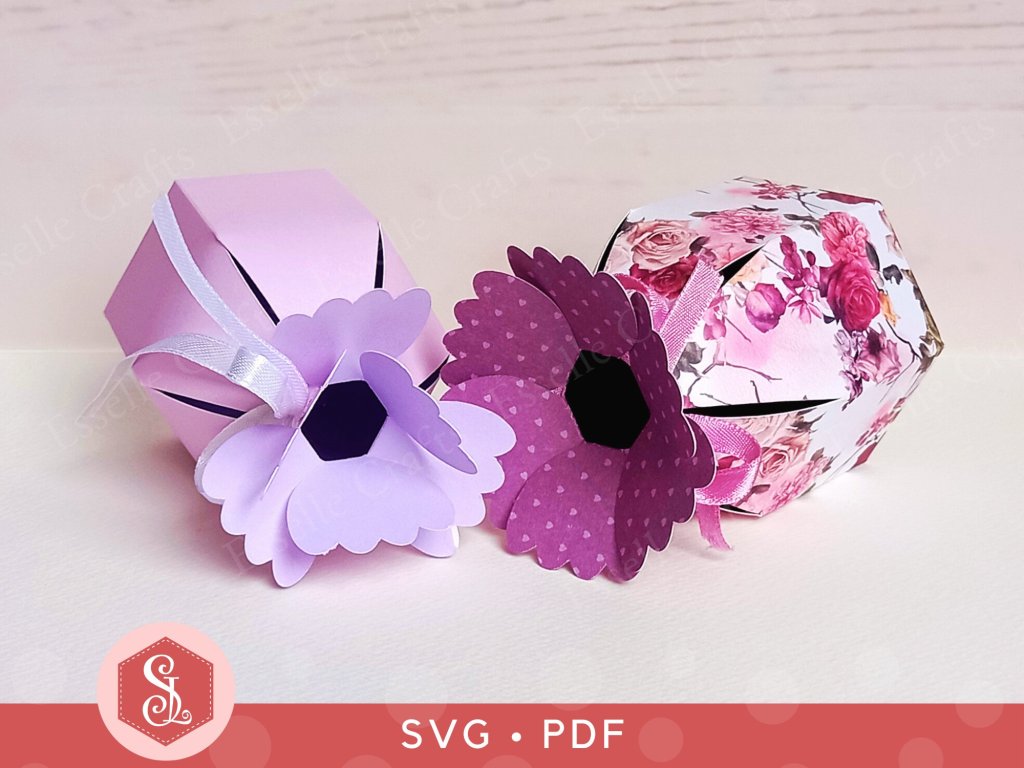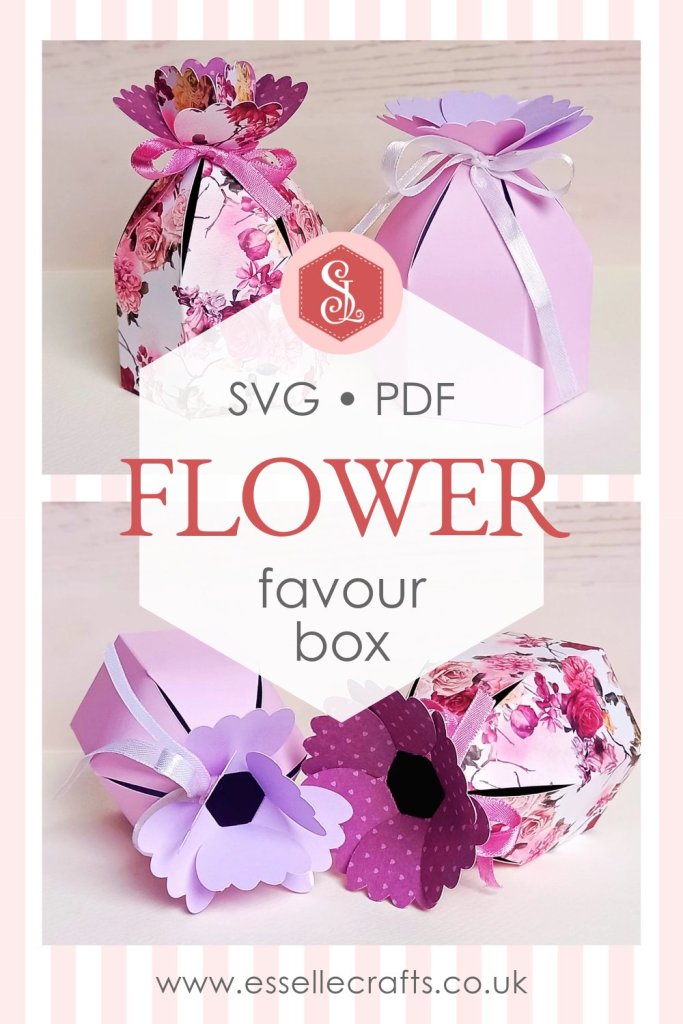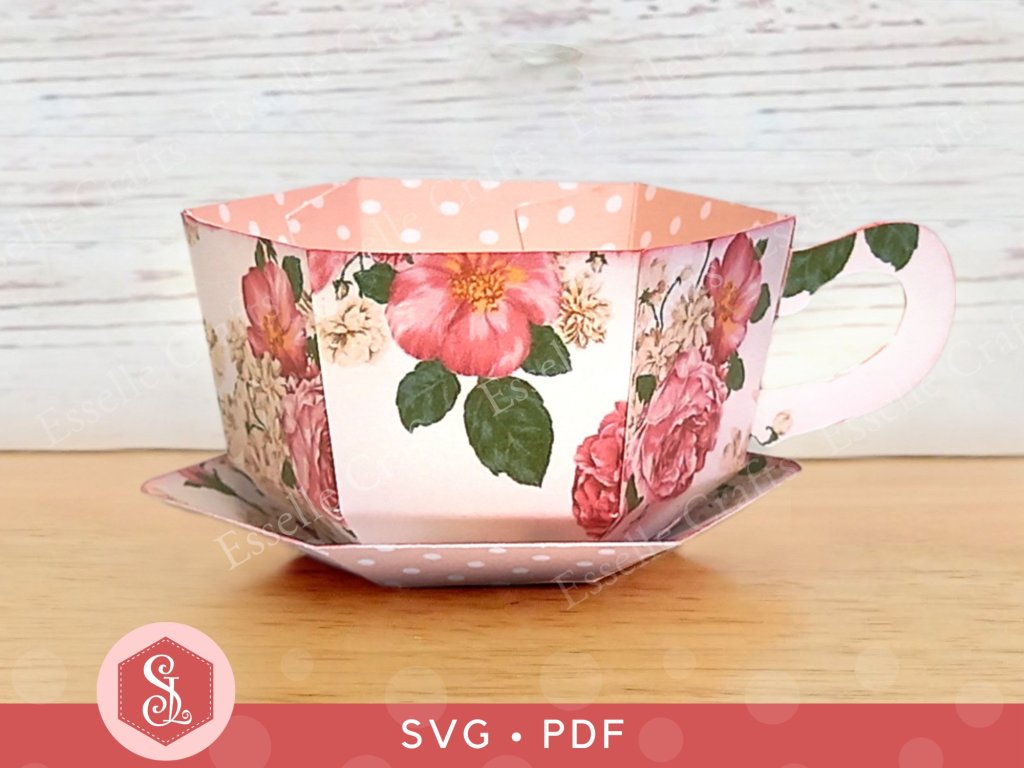
Perfect for birthday parties, Mother’s Day gifts, wedding favours and more, the template for this box is available through my Etsy shop as an SVG cut file, as well as a PDF if you prefer to cut out by hand.
To make one, you will need:
* Flower Favour Box template (PDF and SVG available) * Computer and printer to print the PDF template and instructions * Digital cutting machine * Double sided, patterned cardstock (220-250gsm / 80-92lb recommended) * Craft glue / double-sided tape * Ribbon
If you are not using a cutting machine, you will also need:
* Craft knife / scissors * Scoring tool * Ruler
Watch my video tutorial showing how to assemble the box and be sure to follow the tips below:
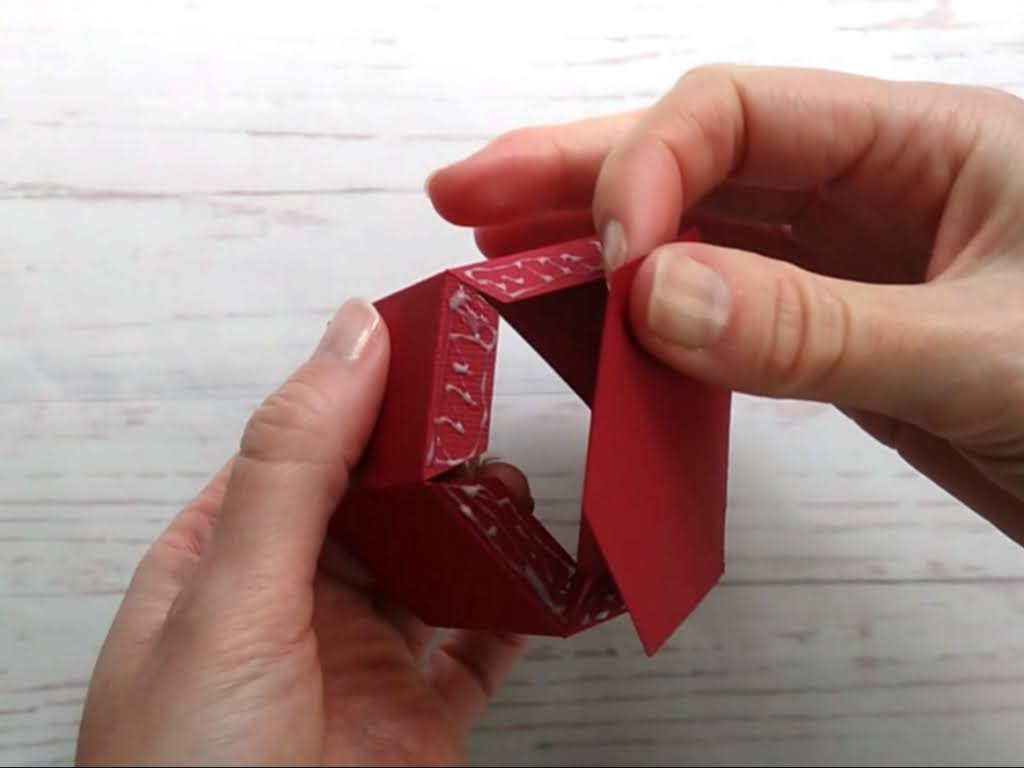
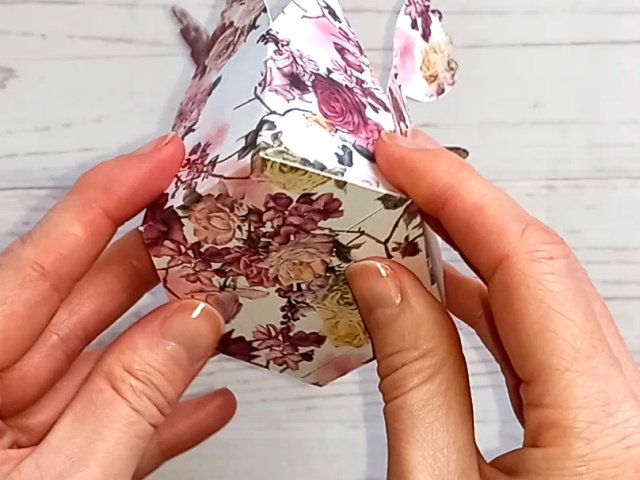
TIP 1 : Make sure that the base is lined up carefully against the score lines. Adding the extra hexagon piece to the inside of the box will hide the tabs and strengthen the base.
TIP 2 : When tying the box up for the first time, pull the ribbon gently to allow all of the petals to join up equally in the centre.
TIP 3 : The petals can be arranged in two different ways. They can either be overlapped to look like an open flower (as shown on the right) or spread out (as shown on the left):
These are such pretty little boxes for gifting small treats, so I hope that you are now inspired to create your own flower favour boxes!
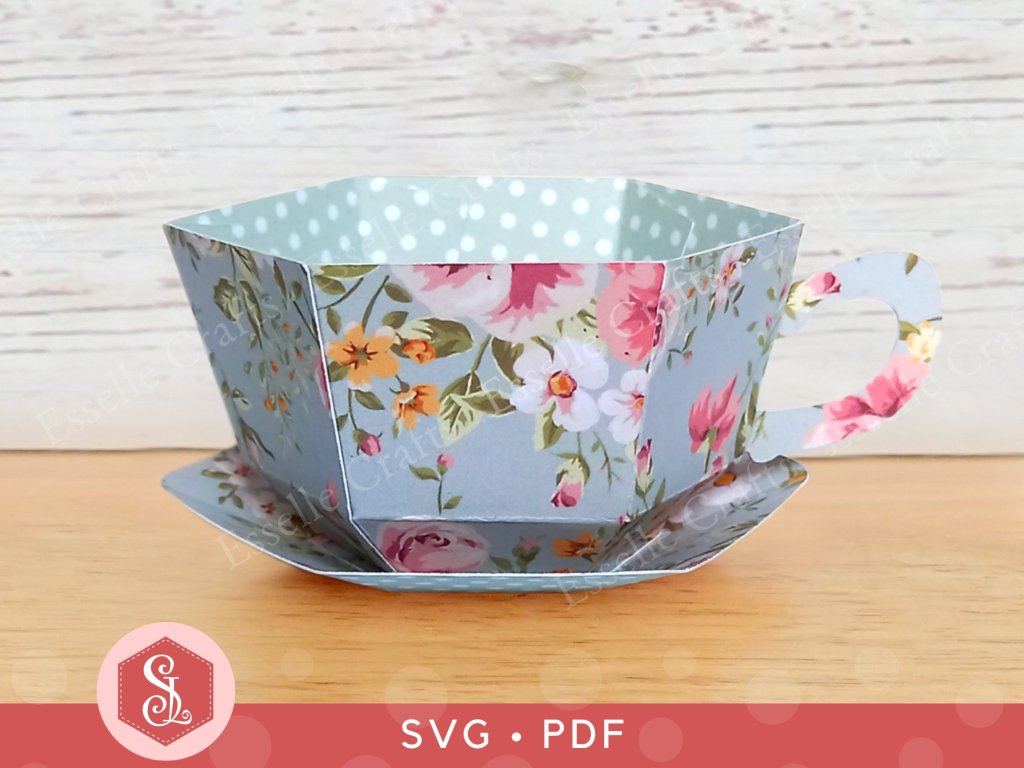
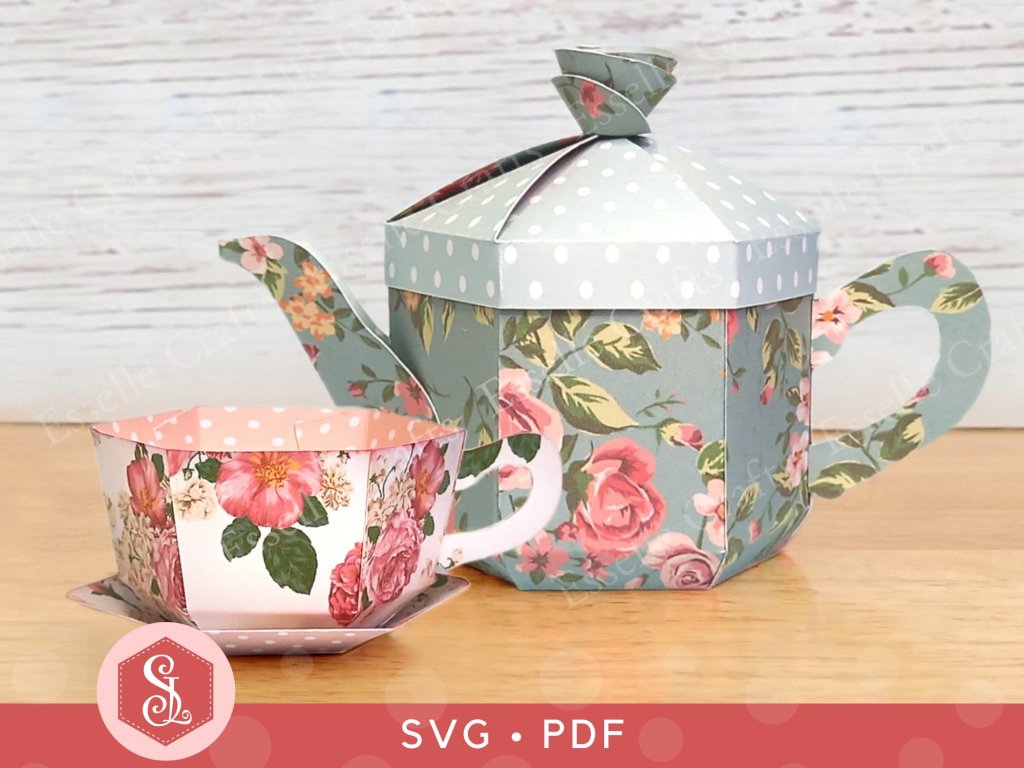
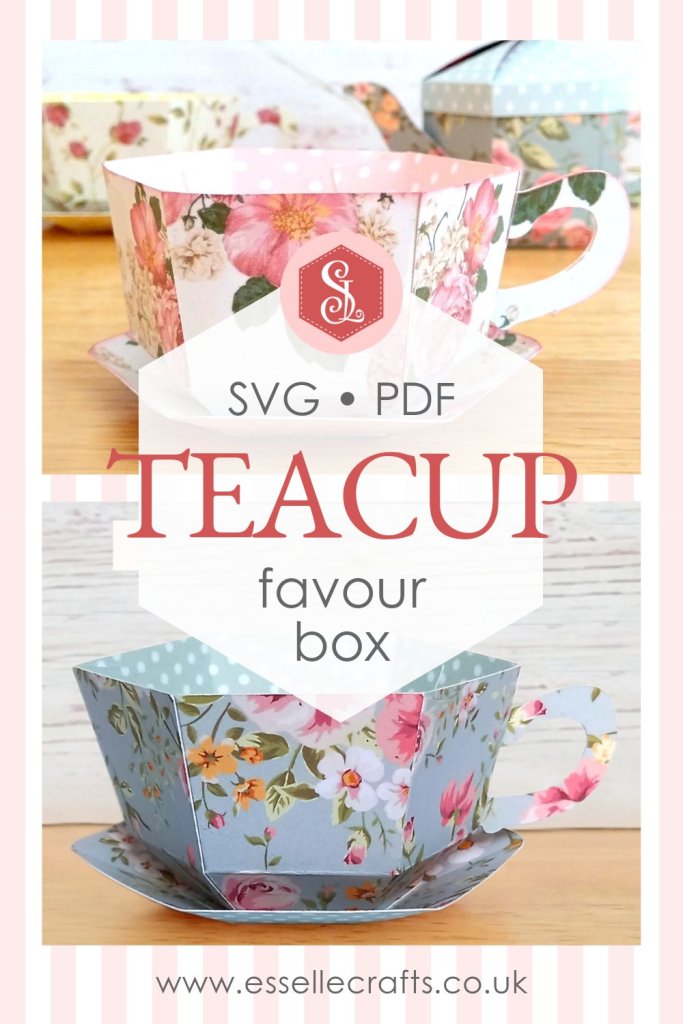
The little teacup can be filled with delicious treats and makes an ideal gift for any tea-lover! Perfect for birthday parties, wedding favours, Mother’s day gifts, tea parties and so much more!
To make a teacup and saucer, you will need:
* Teacup Favour Box template (PDF and SVG available) * Computer and printer to print the PDF template and instructions * Digital cutting machine * Double-sided, patterned cardstock (220-250gsm / 80-92lb recommended) * Craft glue / double-sided tape
If you are not using a cutting machine you will also need:
* Craft knife / scissors * Scoring tool * Ruler
Watch my video tutorial showing how to assemble the teacup and saucer, and be sure to follow the tips below.
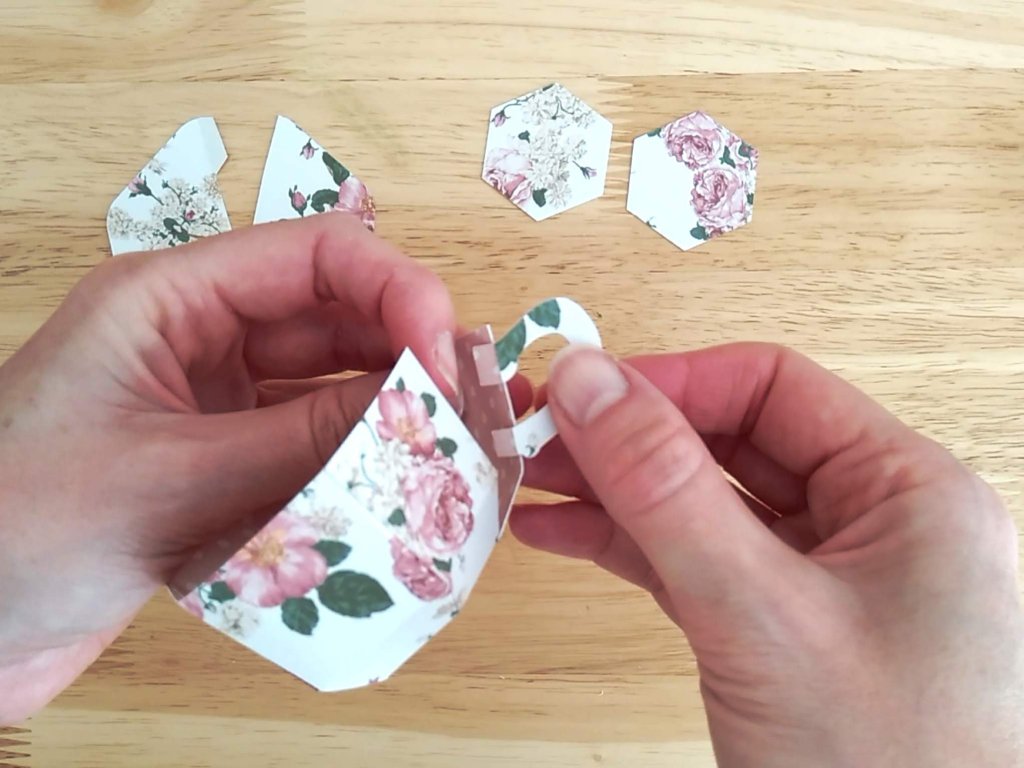
TIP 1: When attaching the handle, position it a couple of millimetres up from the second score line.
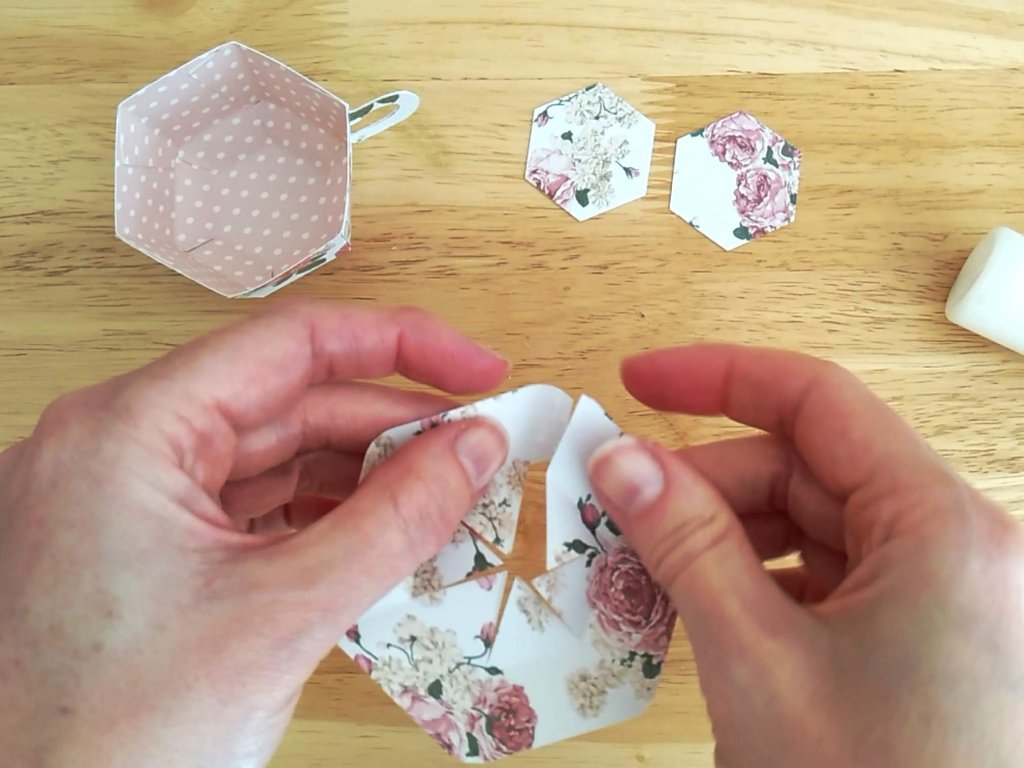
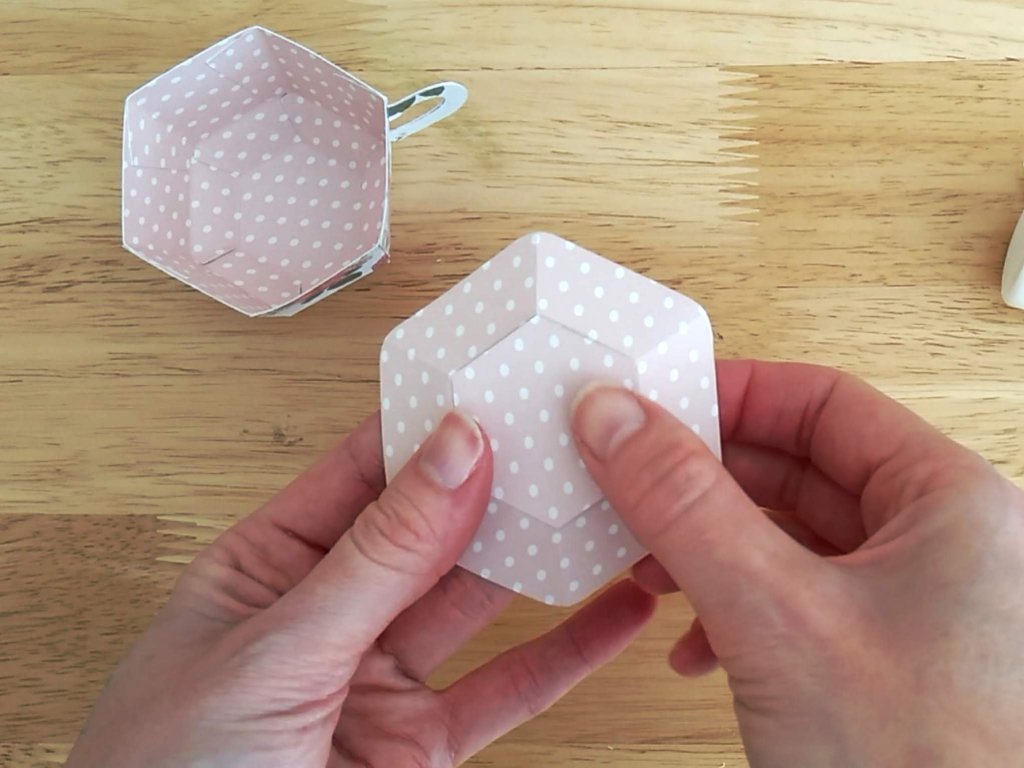
TIP 2: If you are using patterned cardstock, try turning the hexagon pieces until the pattern matches up or looks right with the rest of the saucer.
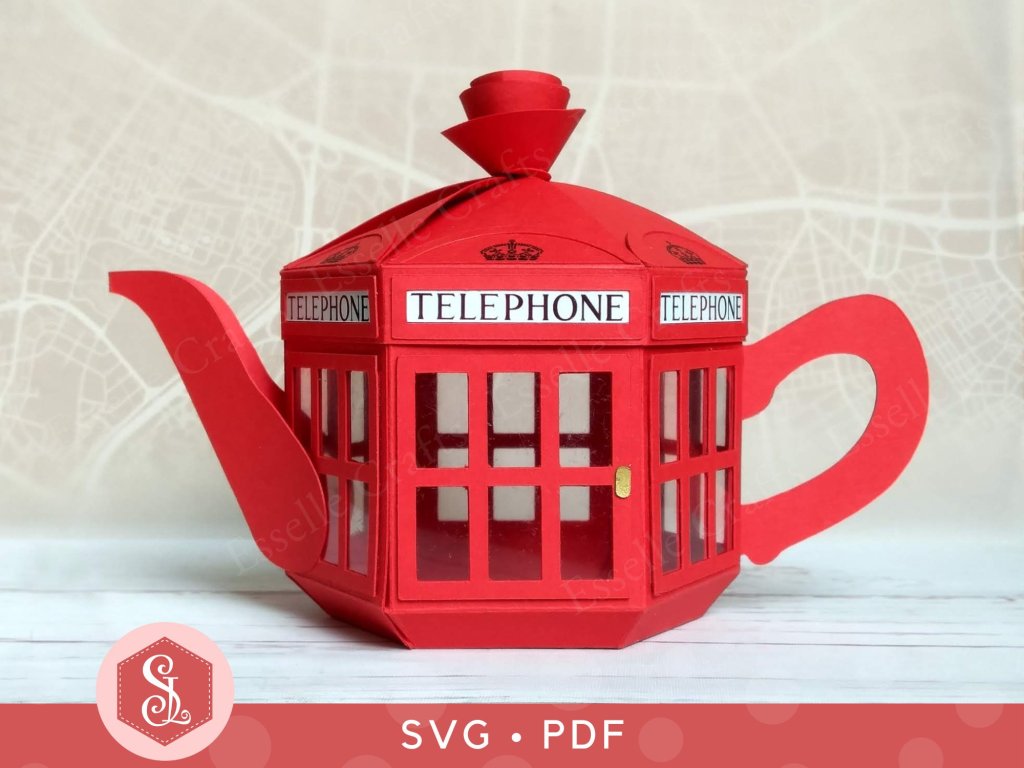
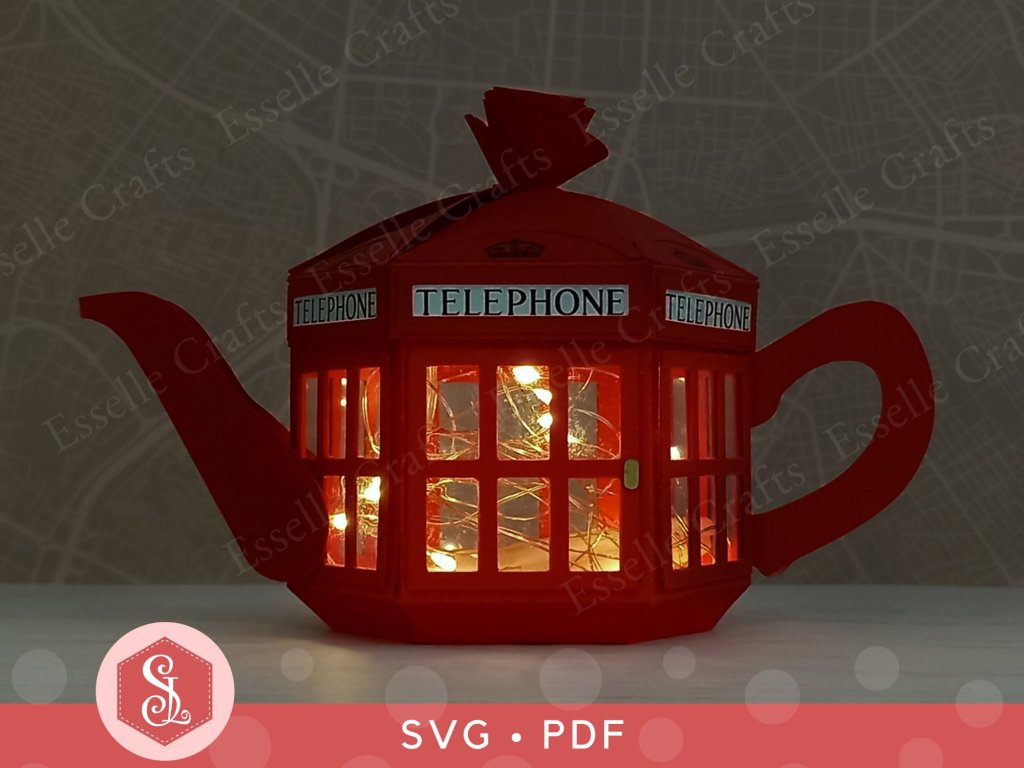
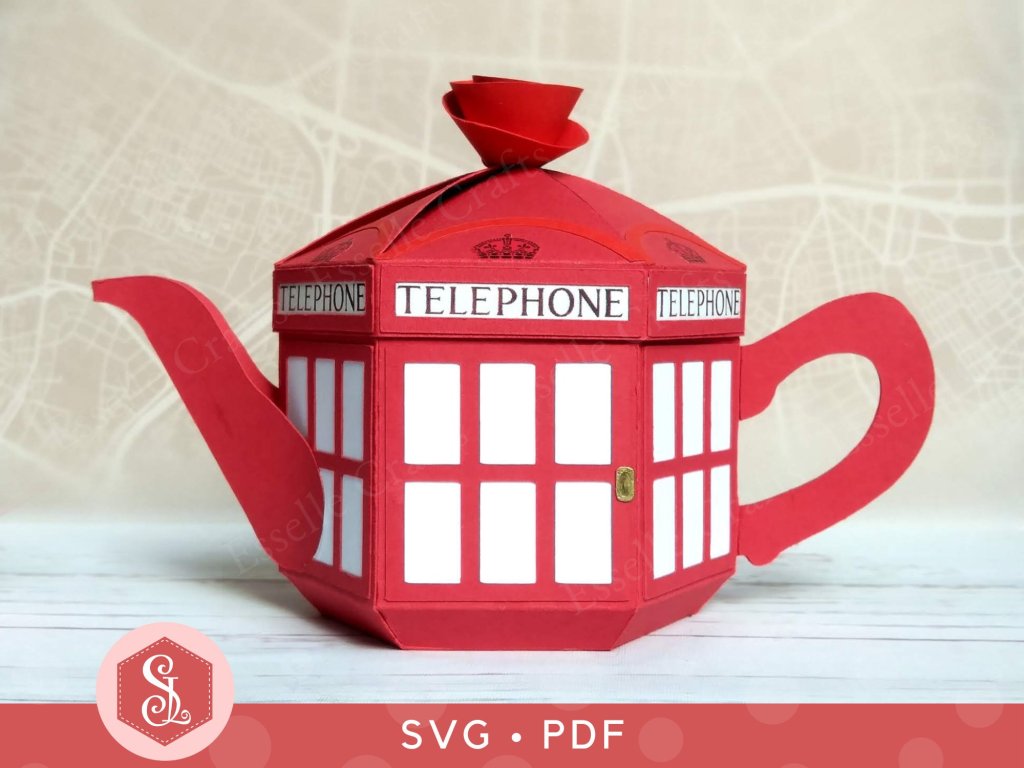
I recently updated my Teapot Favour Box template so that a larger sized box can be made on a 12″x 12″ cutting mat. To complement this, I have also updated my video assembly tutorial over on my YouTube channel.
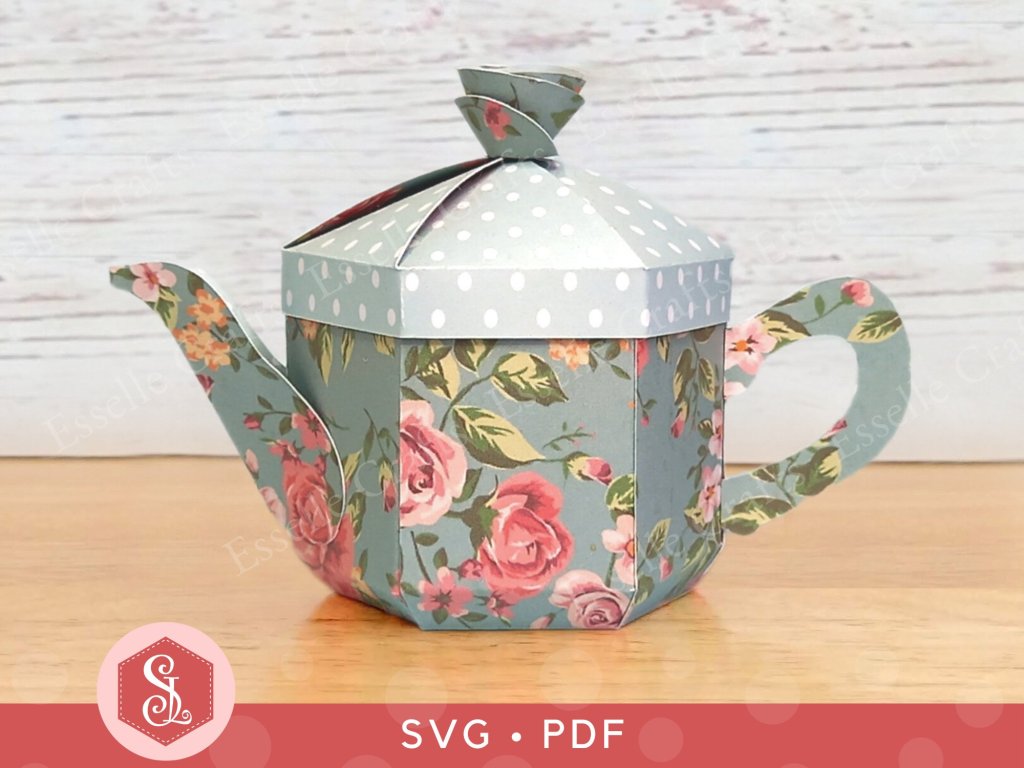
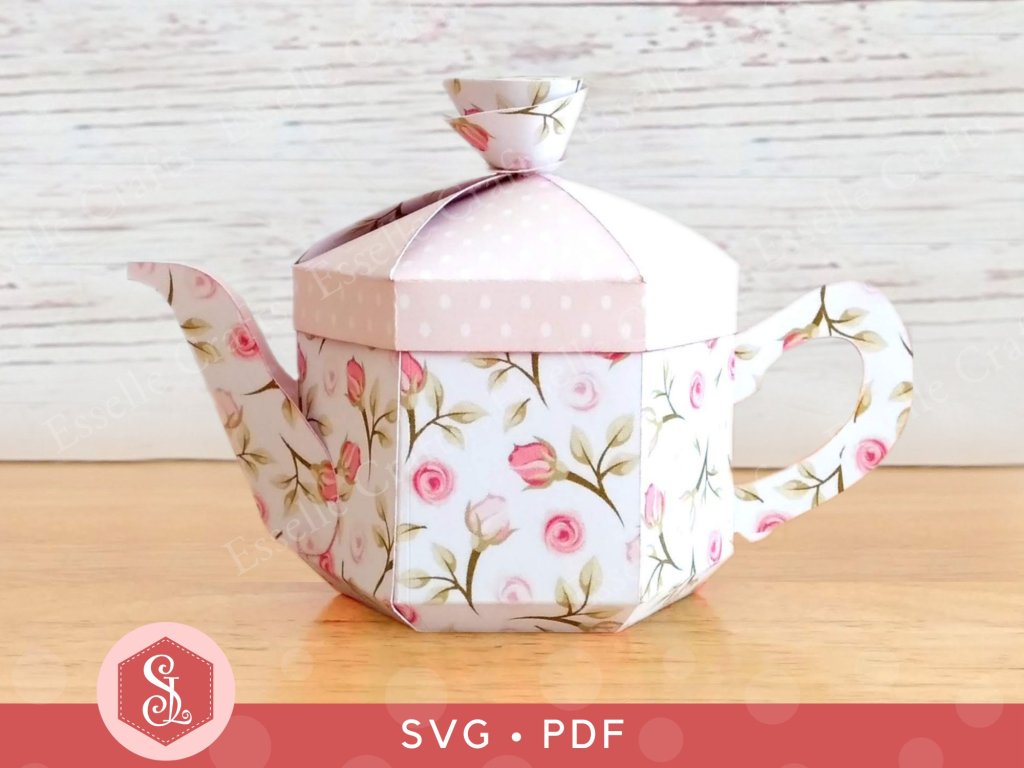
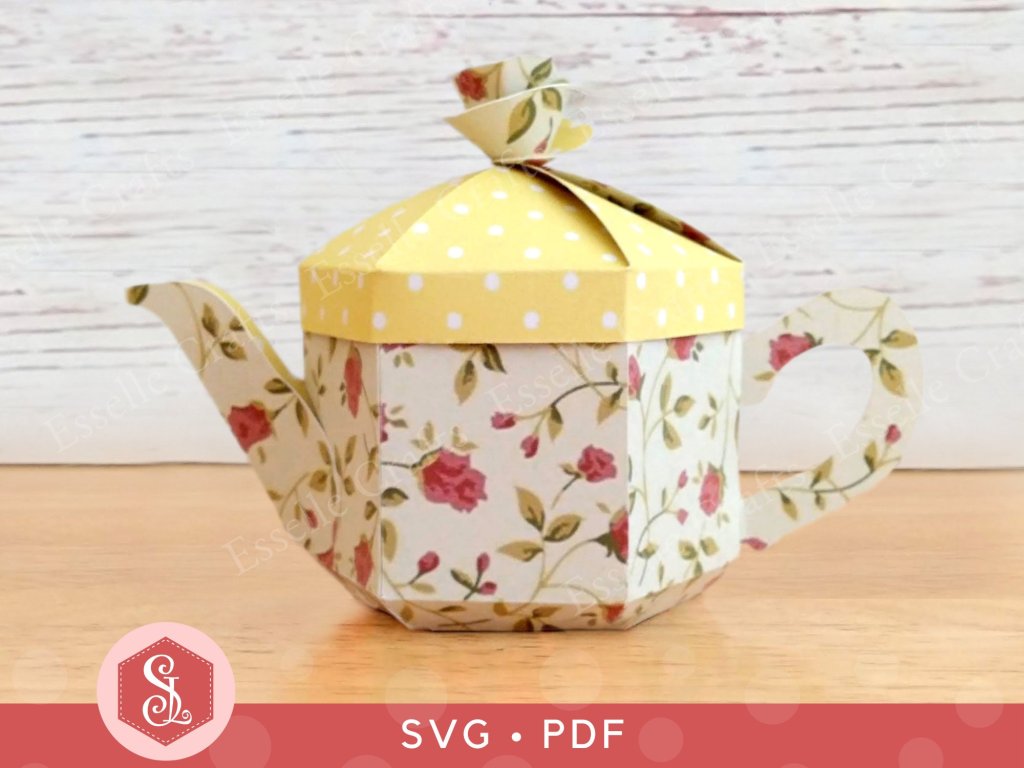
With a removable lid, this adorable little teapot box can be filled to the brim with sweets or small treats and makes an ideal gift for any tea-lover! Perfect for birthday parties, wedding favours, Mother’s day gifts, tea parties and so much more!
To make a teapot box, you will need:
* Teapot Favour Box template (PDF and SVG available) * Computer and printer to print the PDF template and instructions * Digital cutting machine * Double-sided cardstock (220-250gsm / 80-92lb recommended) * Craft glue / double-sided tape
If you are not using a cutting machine you will also need:
* Craft knife / scissors * Scoring tool * Ruler
Watch my new, updated video tutorial showing how to assemble the teapot box and be sure to follow the tips below.
TIP 1 : Glue the two base pieces together carefully so that the score lines match up.
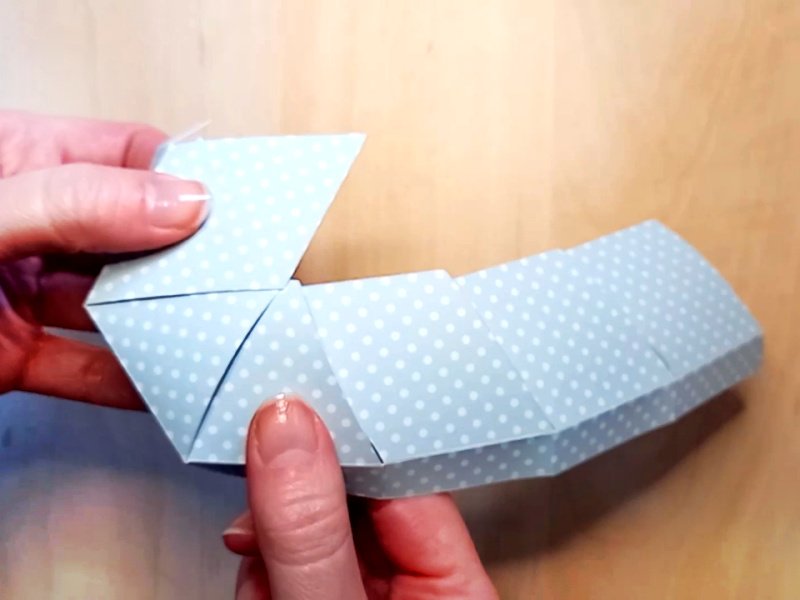
TIP 2 : Starting from the left side, tuck each of the six lid flaps into one another, then glue the small tab to the inside to secure. Make sure that all of the corners meet evenly in the centre, then apply a tiny dot of glue to the centre to hold it all in position.
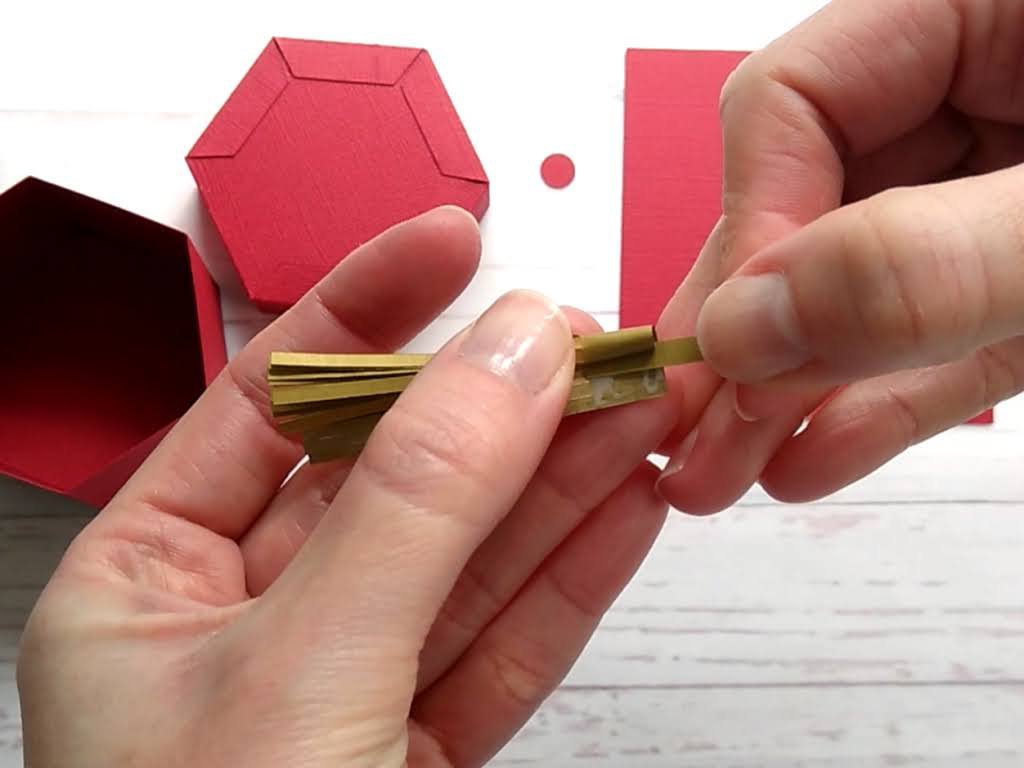
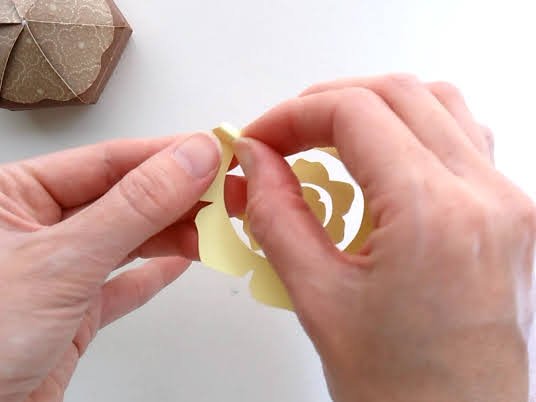
TIP 3 : After rolling the rose to the end, allow it to unroll slightly until you get the desired size. Then glue the end to the base of the rose and hold it in place until it dries. I find that using a pencil with a rubber on the end helps with this.
So, what will you fill your little teapot box with? Chocolates? Candies? Biscuits? Teabags? The choice is yours!
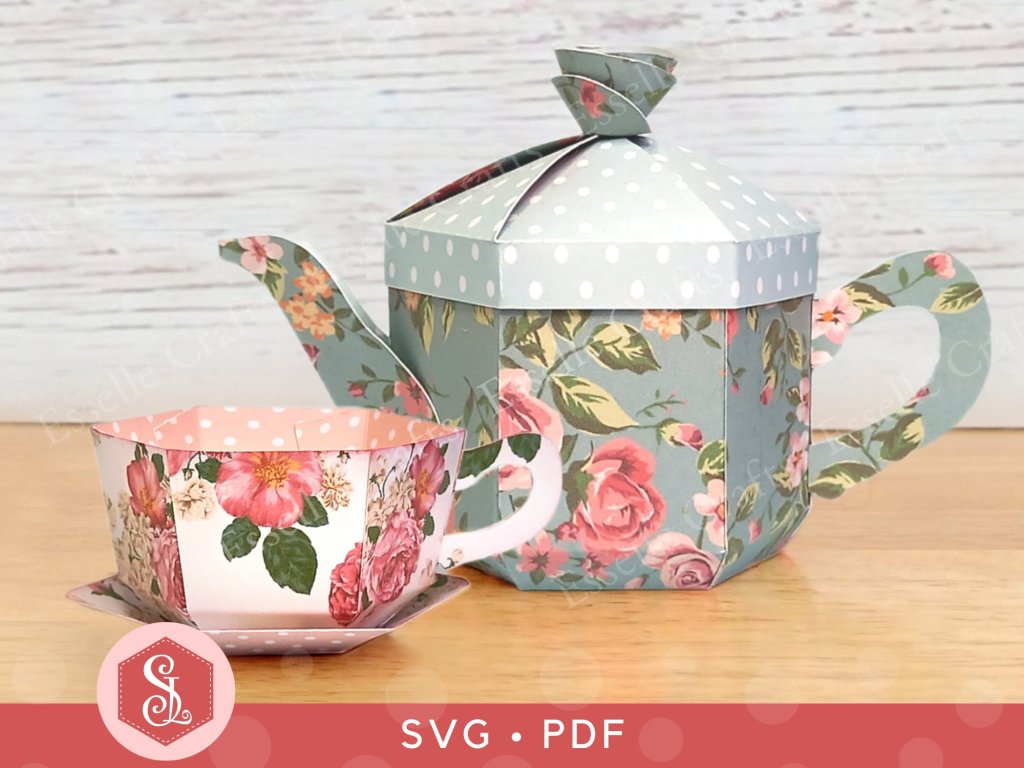
And don’t forget, if you team the teapot box with my teacup and saucer favour boxes, then you can create your own fantastic little paper tea sets!
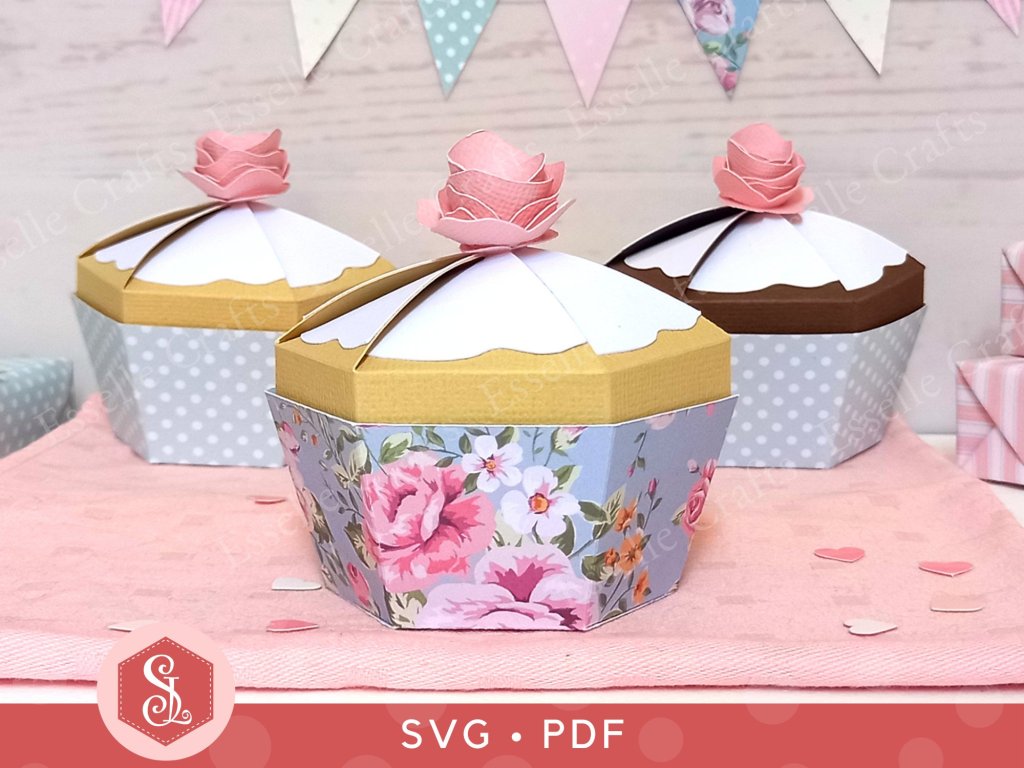
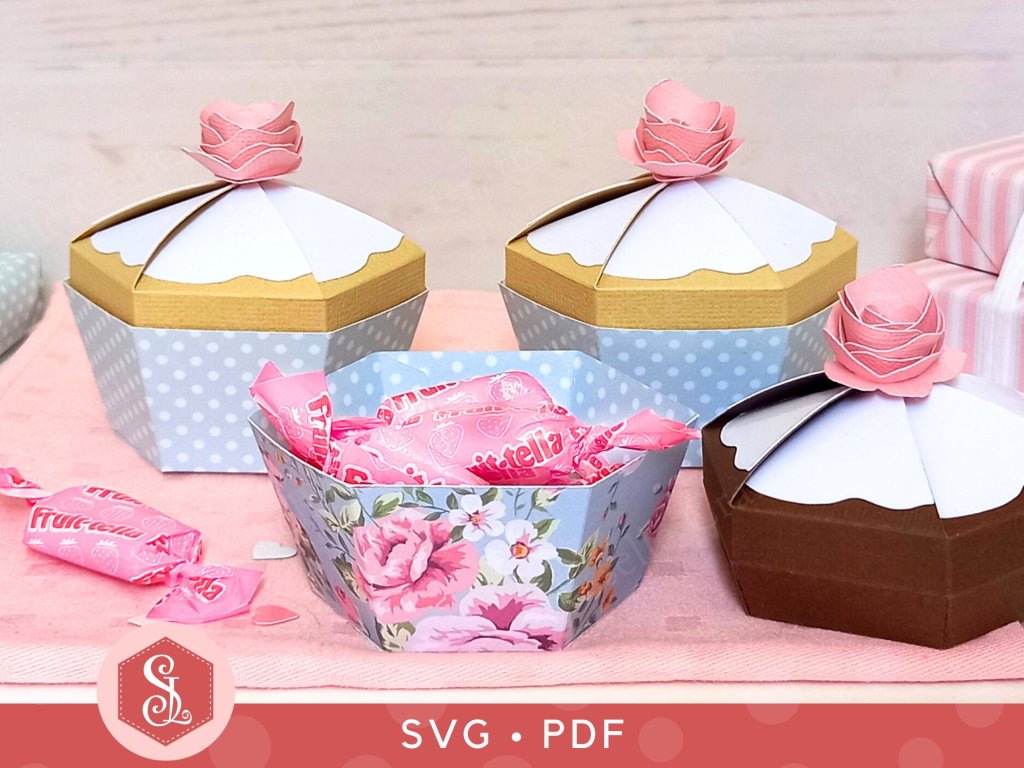
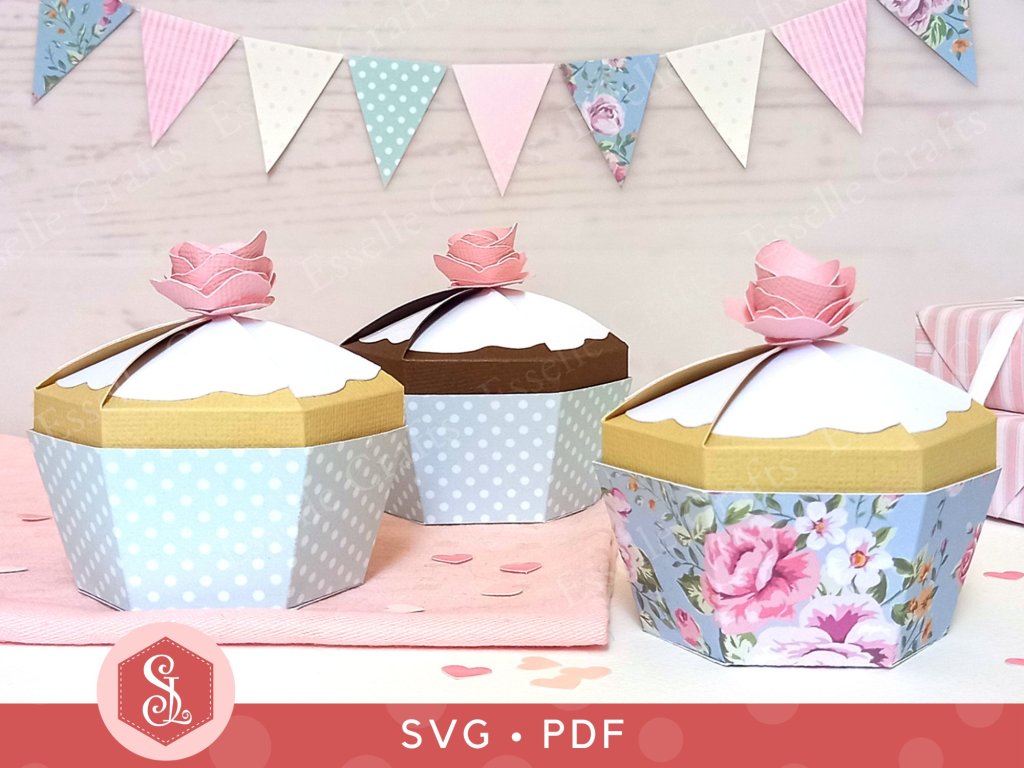
The boxes are super cute and the template is easy to assemble and, once they are filled with delicious treats or small gifts, they make the perfect addition to any tea party or celebration! 🧁
To make a cupcake box, you will need:
* Cupcake Favour Box template (SVG and PDF available) * Computer and printer to print the PDF templates and instructions * Double-sided / patterned cardstock (220-250gsm / 80-92lb recommended) * Thinner card for the icing panels (160gsm / 60lb recommended) * Craft glue / double-sided tape
If you are not using a digital cutting machine, you will also need:
* Craft knife / scissors * Scoring tool * Ruler
Watch my video tutorial showing how to assemble the box and be sure to follow the tips below:
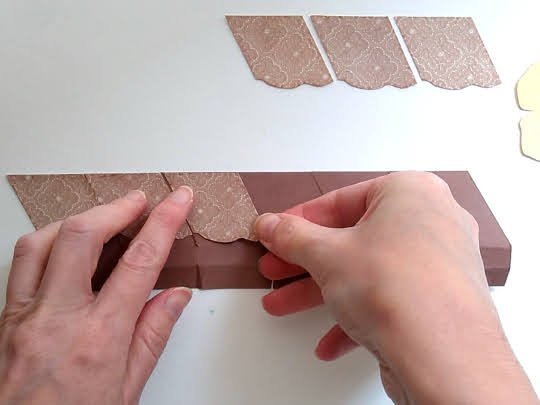
TIP 1 : I recommend using thinner card for the icing panels (approx 160gsm / 60lb) as the lid may not close properly if it’s too thick. Patterned or embossed papers work really well for these panels to create texture and interest.
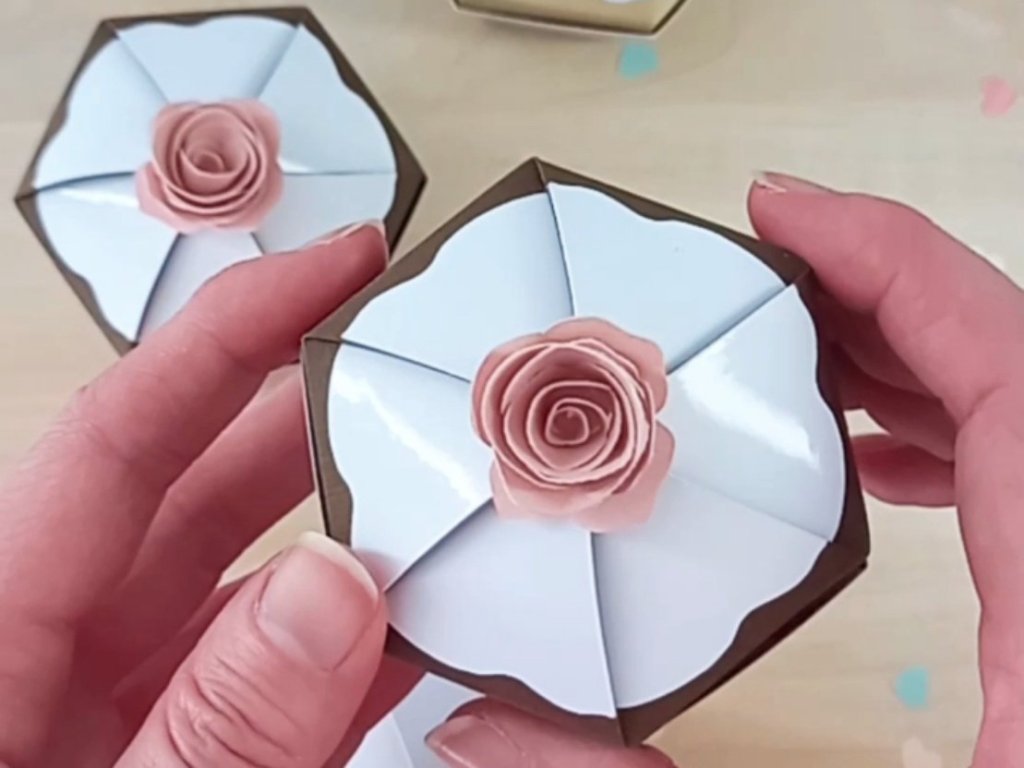
TIP 2 : Try inking the edges of the icing panels before gluing them into place to give them added definition. You could also use glossy card (as I’ve done here) or apply a thin layer of acrylic gloss varnish to really make the icing sparkle! ✨
TIP 3 : Allow the rose to unroll slightly before gluing it. You could also apply a little acrylic gloss varnish to the edges of the finished rose to look like a glaze.
Choosing your own colour scheme means you can match your little cupcake favour boxes to any occasion or celebration. I really love these vintage pastel coloured boxes. They would look great as wedding favours, or you could make a really big one as a centerpiece for a birthday or for Mother’s Day.
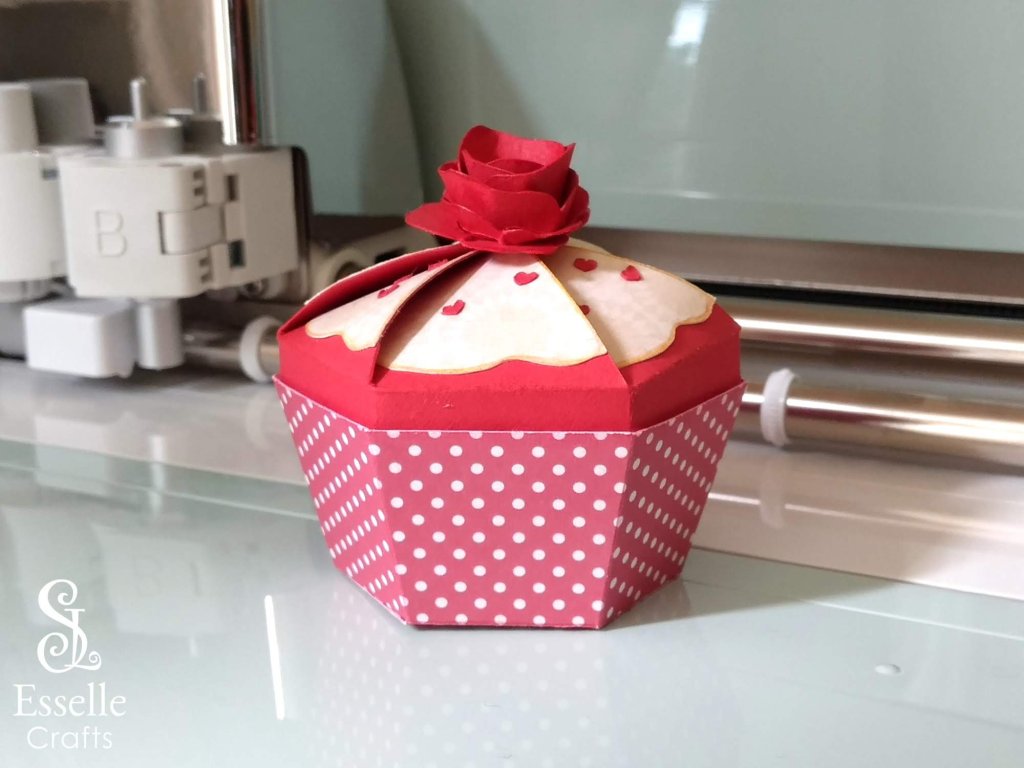
This little red velvet cupcake box (that I made previously) is still my favourite! 🧁 I had so much fun choosing the colours and patterns for it, but it would not have been possible without my fabulous Cricut cutting machine! ❤️ Those teeny tiny hearts that I added on for extra detail are about 3mm wide! Imagine cutting those out by hand!
Whether you’re using the SVG cut files or the PDF file, resizing the templates is super easy. Imagine giving a tiny one to someone with a surprise gift inside!💍
I would really love to see the little cupcake boxes you create using this template and what you put inside them. Maybe you could make one a little bit bigger and put a real cupcake inside it – then you truly could have your cake and eat it! 🧁
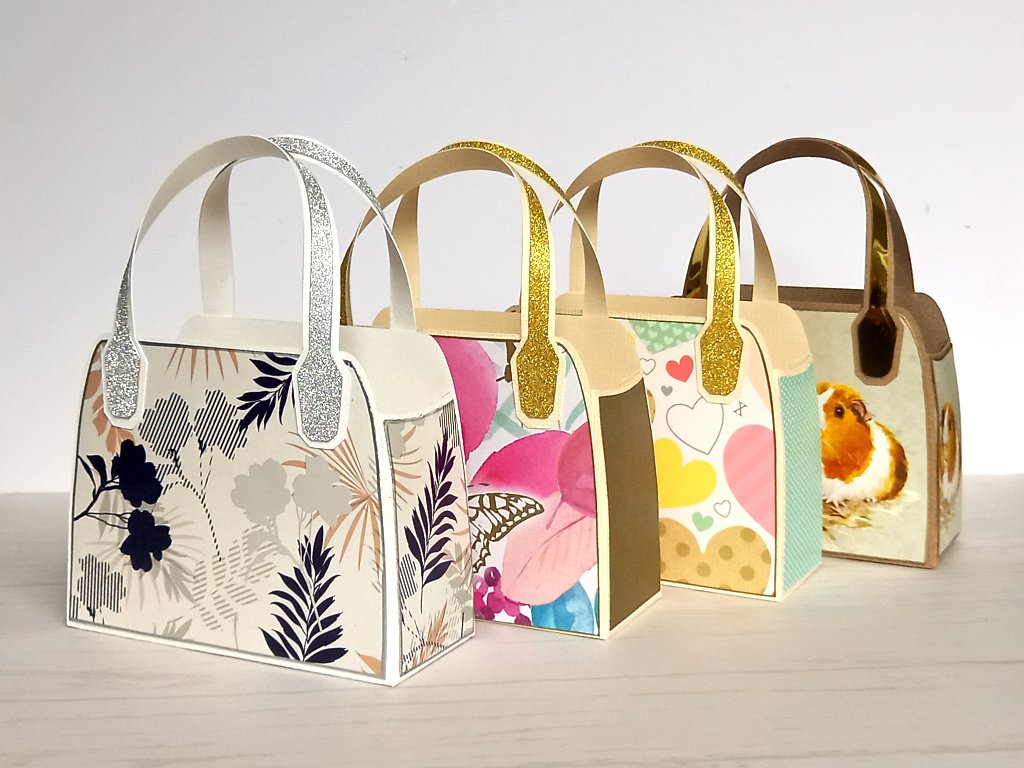
For this first one, I cut the front, back and side panels out of an old tissue box, then used a silver metallic marker pen around the edges before gluing them in place. To compliment the silver, I used silver glitter card for the handle panels.
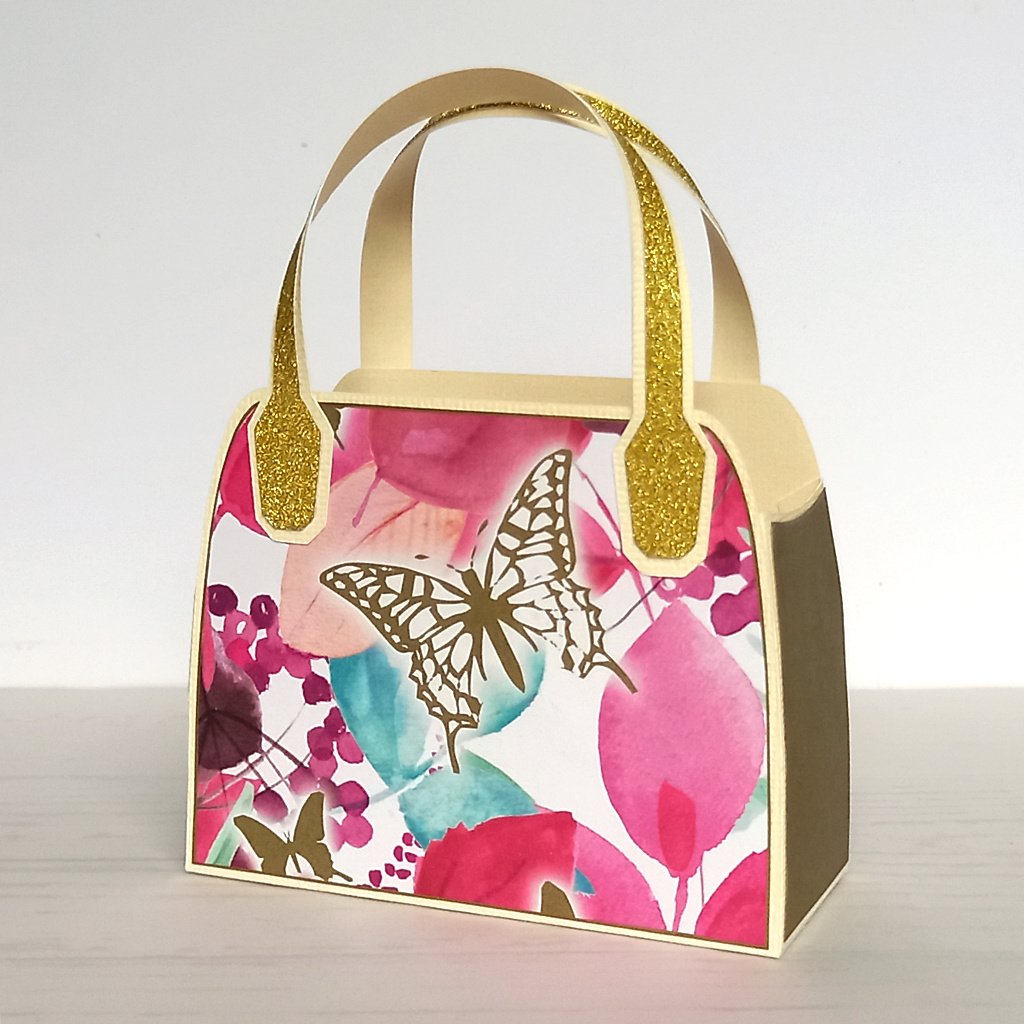
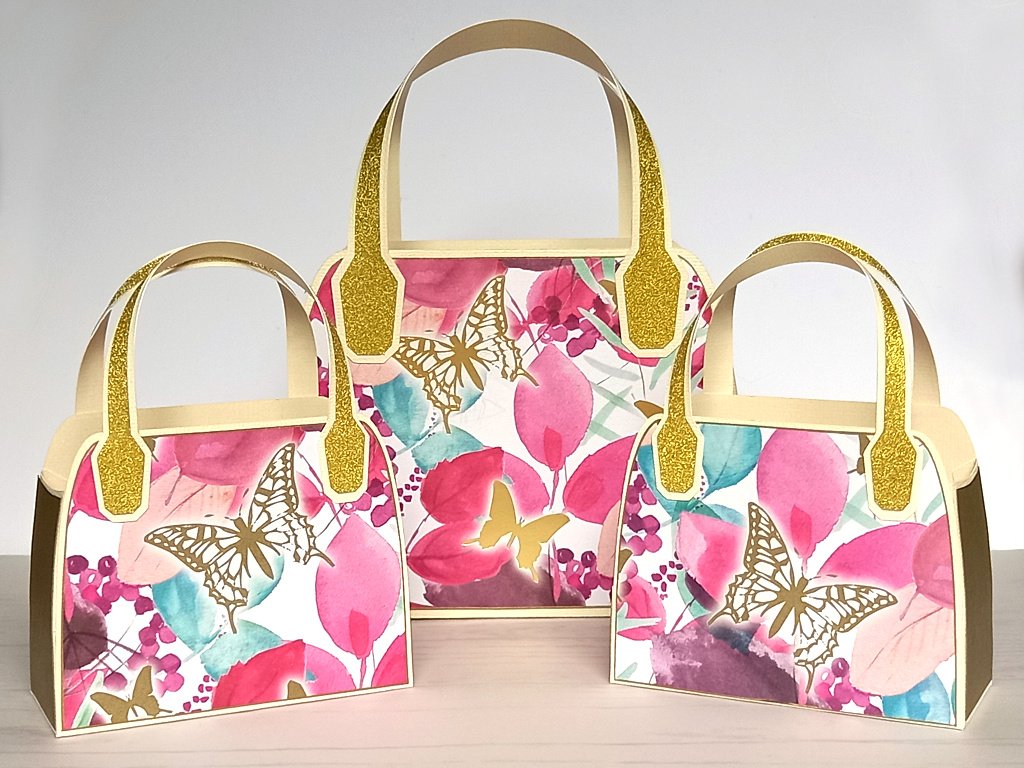
The panels on this colouful butterfly bag started life as a different kind of gift bag! It was given to me last year, but the base was slightly damaged, so I cut it up and used as much of it as I could.
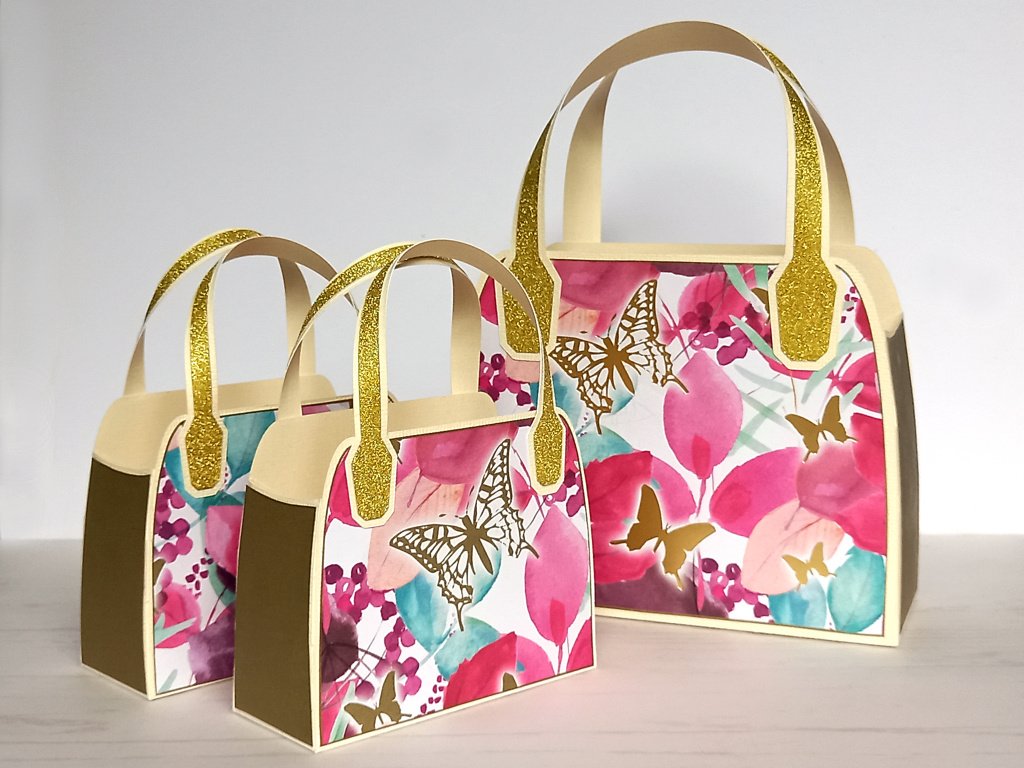
The front and back panels came from the front and back of the original gift bag, and the smaller side panels came from the sides of the bag, which were a lovely dark, gold colour. To compliment this, I used a gold metallic marker pen around the edges of the panels and a bright gold glitter card for the handle panels.
The original gift bag was quite large, so I ended up making three bags – one large and two small!
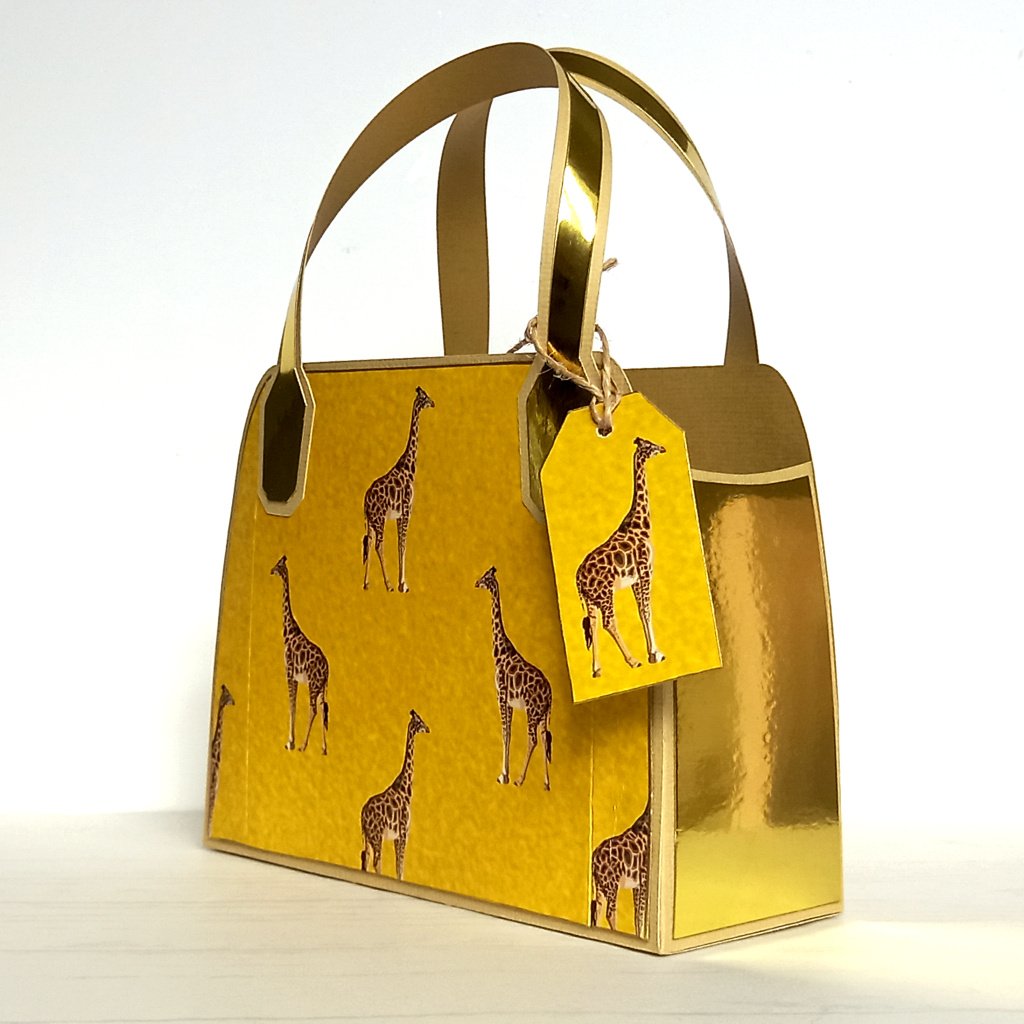
This next bag is definitely my favourite! 💛 The giraffe design came from another old tissue box, and again I used a gold metallic marker pen around the edges of the panels. I cut the side panels and handle panels out of gold mirror card and had just enough of the giraffe design card to make a matching gift tag!
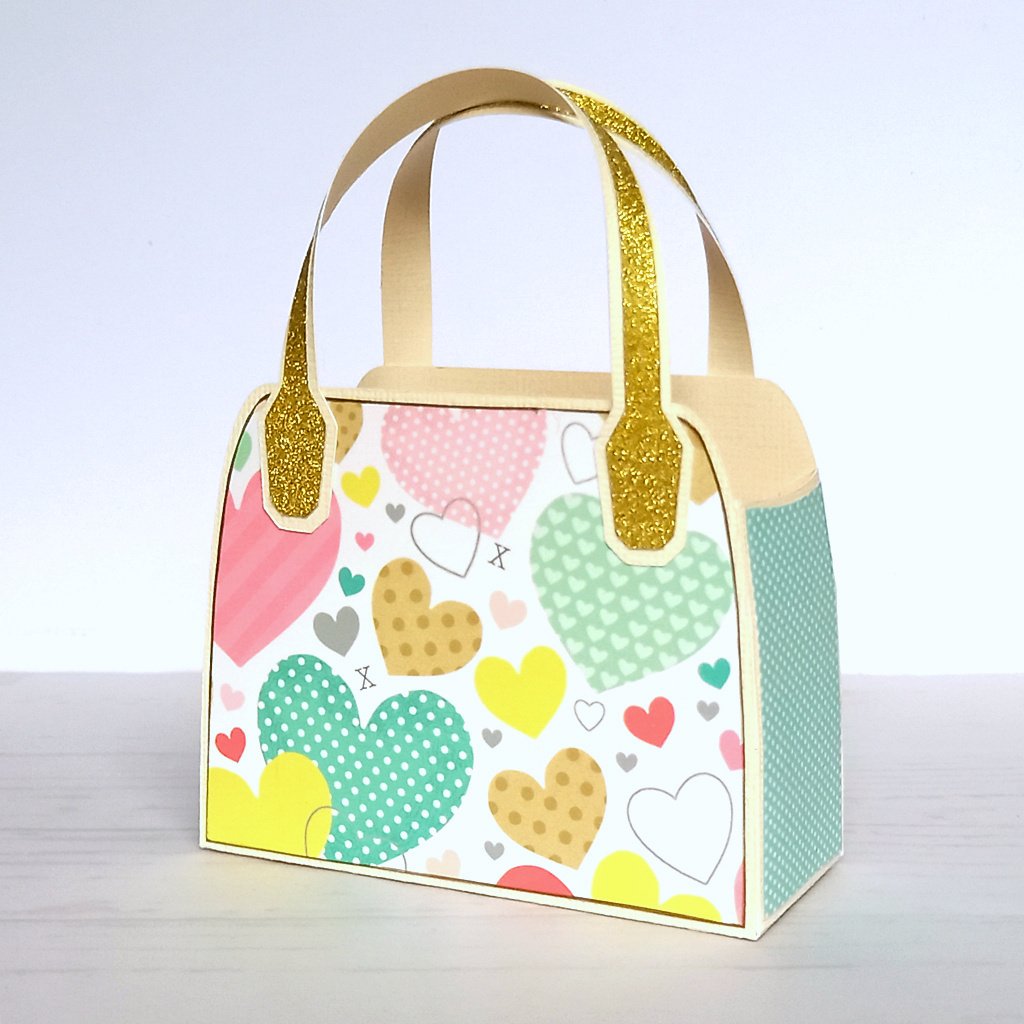
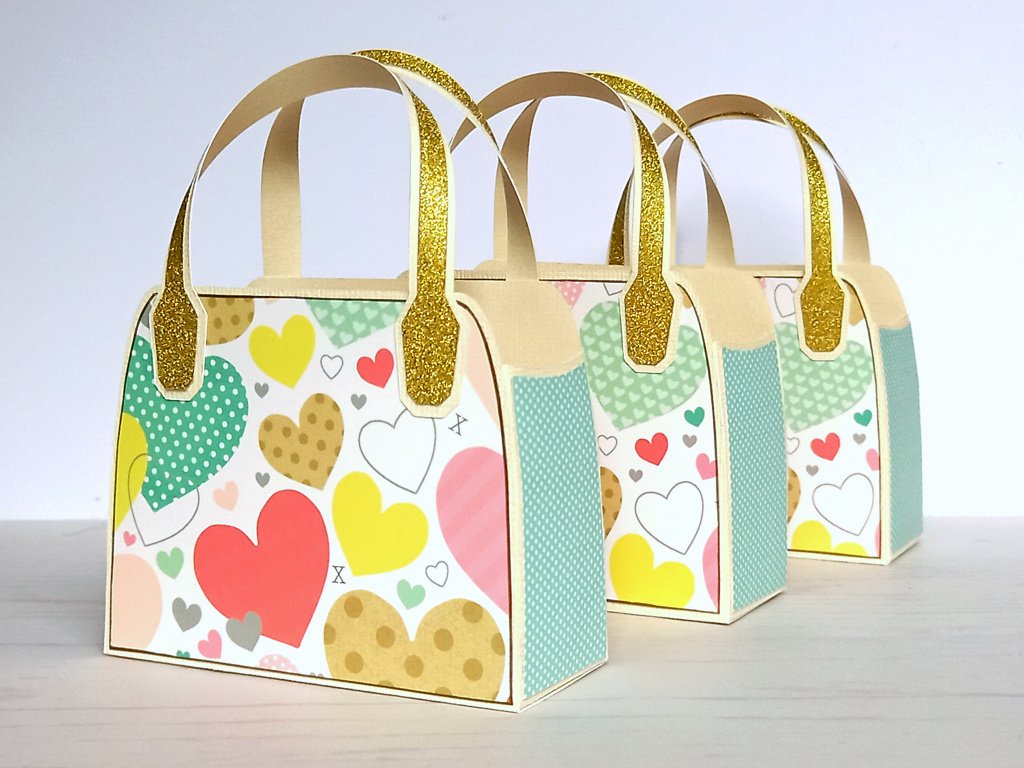
This next bag also started life as a different kind of gift bag and, just like the other one, I cut the front and back panels from the front and back of the original gift bag and the smaller side panels from the sides of the bag.
The gift bag was quite large again, so I had enough to make three small bags!
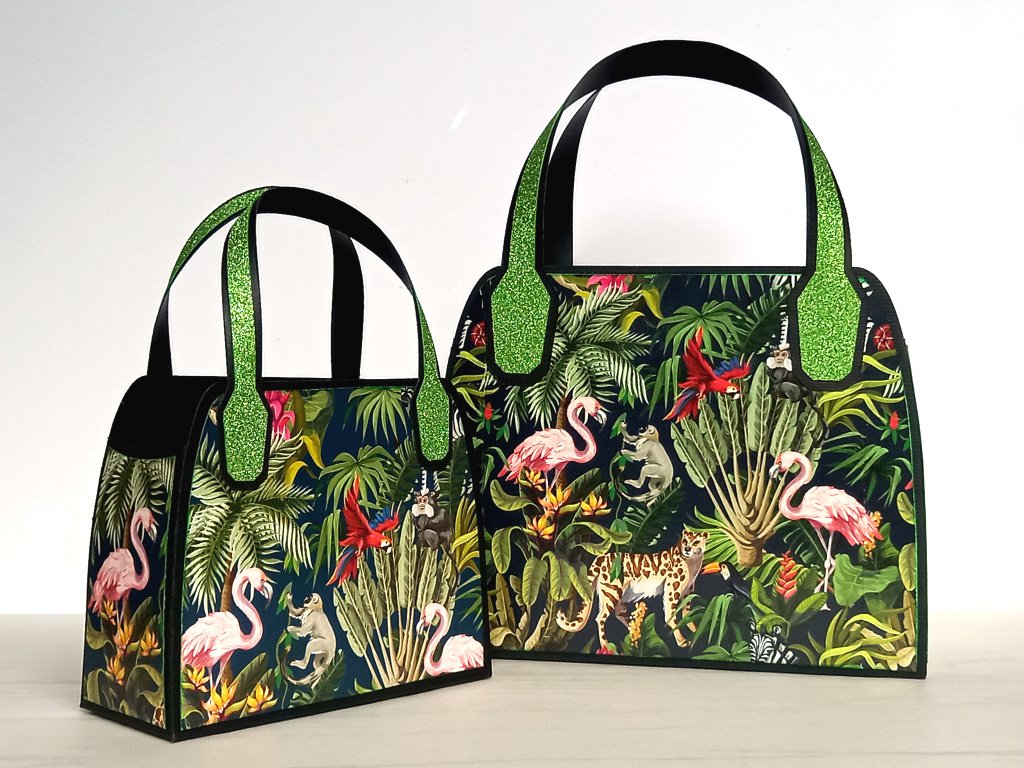
Finally, I had collected two tropical jungle design tissue boxes, which I turned into these two fabulous favour bags! I used green glitter card for the handle panels, and the main bag pieces were cut from the cover of an old art folder.
As I wrote in my previous post, not all of the bags are made entirely from upcycled materials, but it gave me a good chance to go through my cardstock scraps and use bits that have been hanging around for a long time ♻️
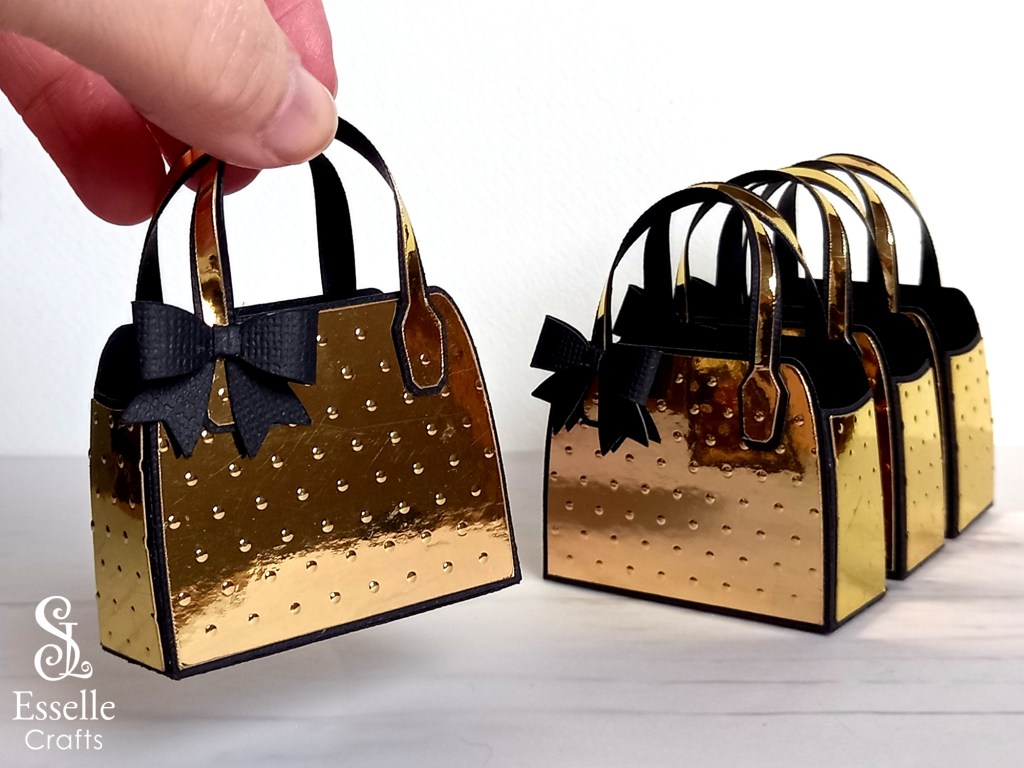
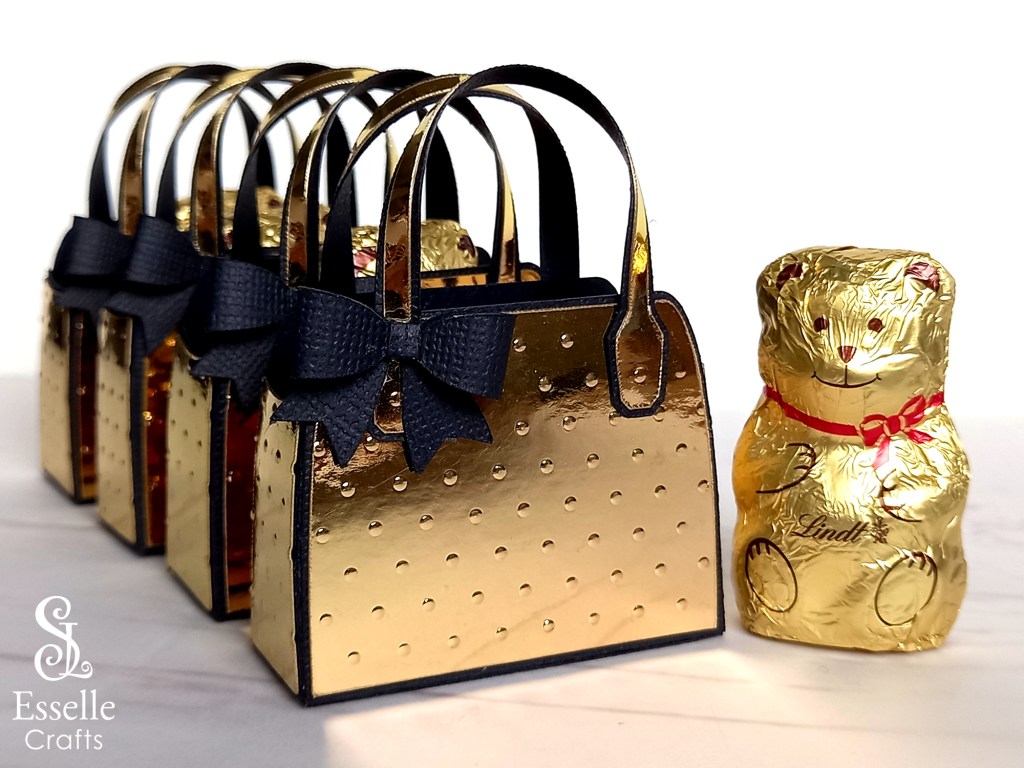
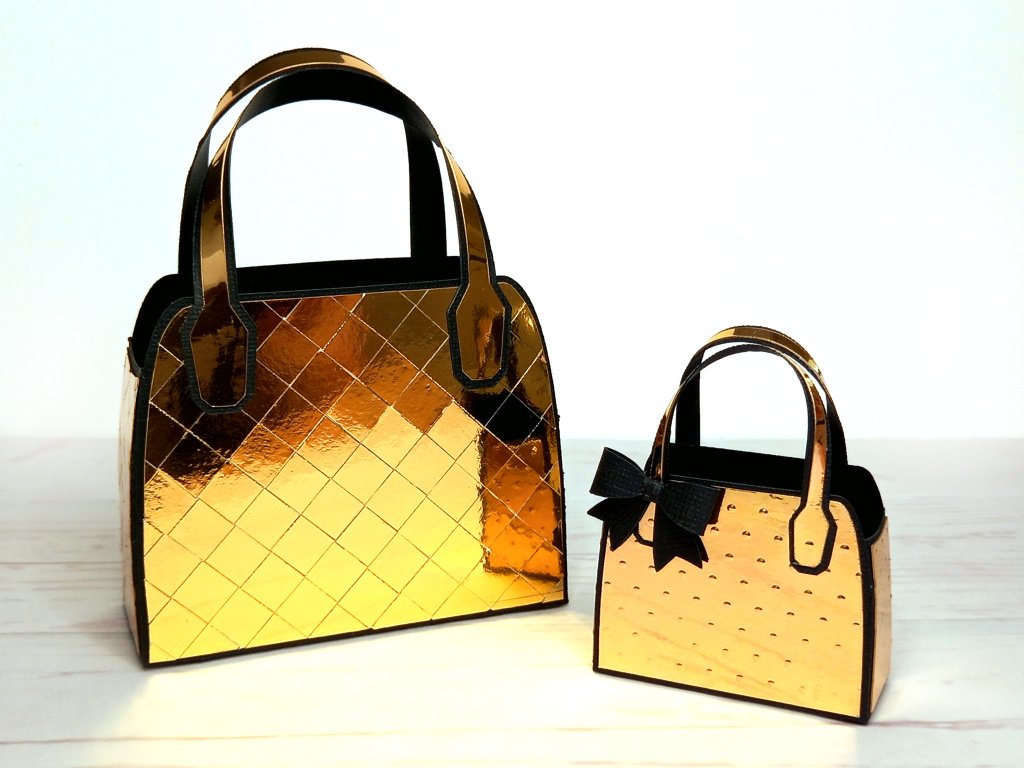
Using my butterfly favour bag template, I experimented with different sizes and created these cute mini black and gold bags!
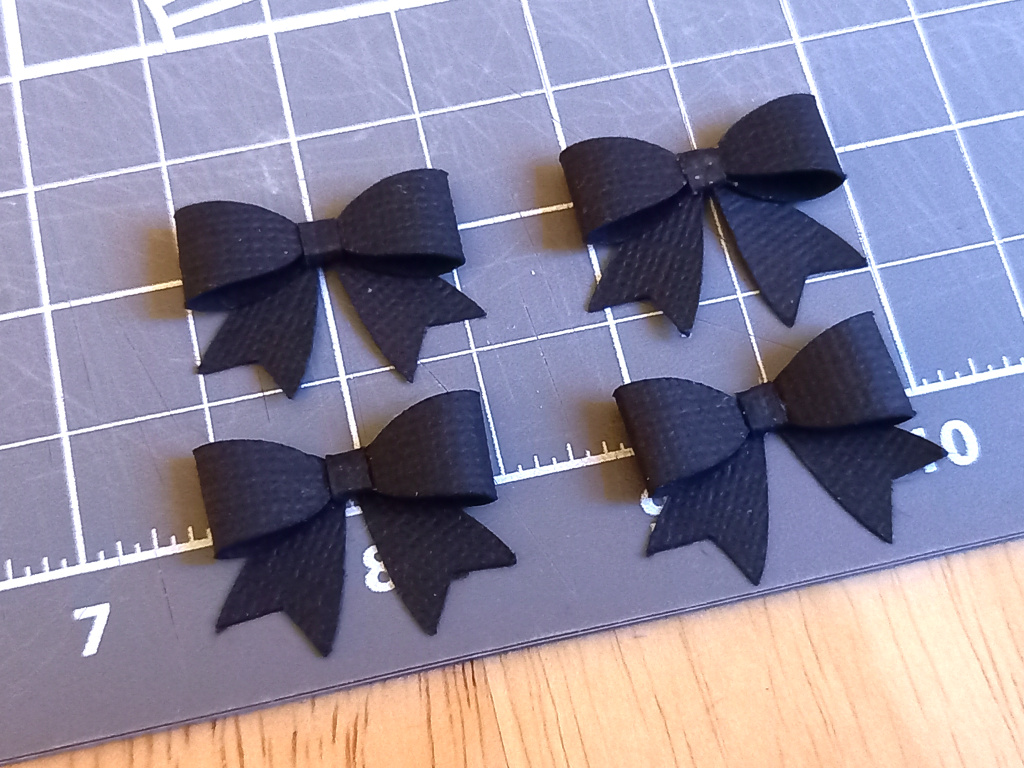
I used gold mirror card for the panels and, instead of using the butterfly, I embossed each of the panels with small polka dots. I kept the bows as an extra embellishment, despite the fact that they were so ridiculously tiny to make!
I reduced the size of the SVG template in Cricut Design Space to 17.5cm / 6.9″ (W ) making the measurements of the finished bags approximately 5.7cm (W ) x 2.3cm (D) x 7.4cm (H) / 2.25″ (W ) x / 0.9″ (D) x / 2.9″ (H).
This made them the perfect size to hold a mini Lindt chocolate teddy bear!
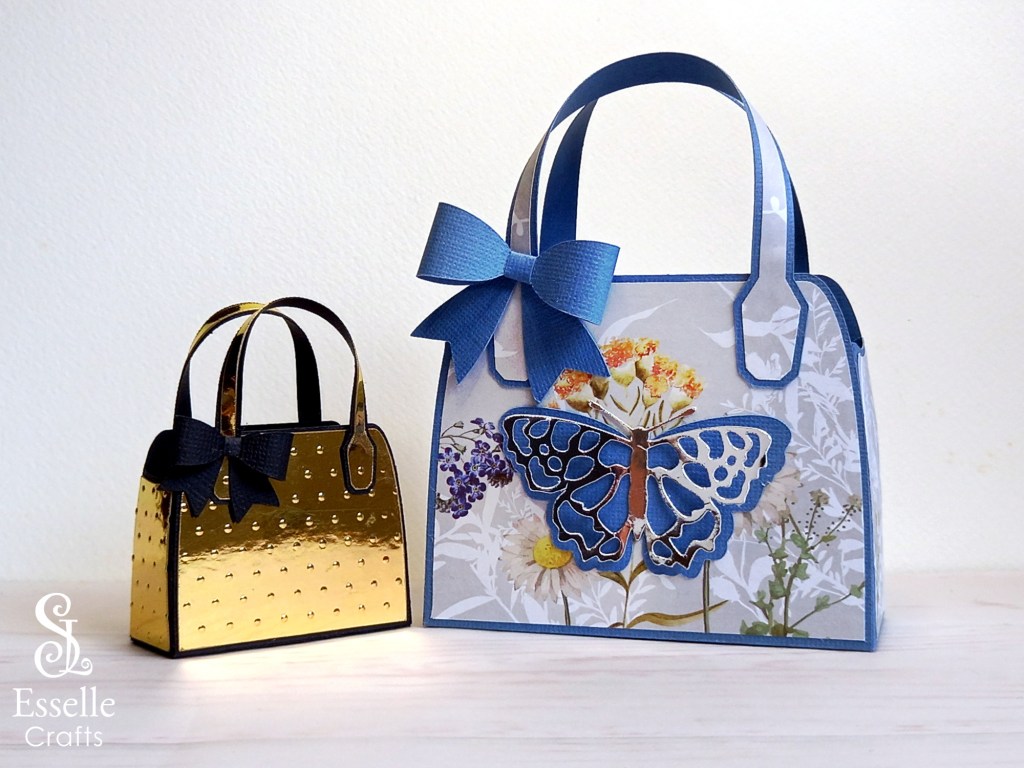
Here you can see the difference in size compared to the standard size bag that I made.
I think you’ll agree that these mini versions are super cute, but also super stylish. What little treats would you put inside a bag this small?
The main structure of this stunning purple bag is made from an old school book cover! I then cut the front, back and side panels out of textured paper. The handle panels were cut from silver mirror card and the enlarged bow was made from another piece of the school book cover.
I think this is definitely one of my favourites! 💜
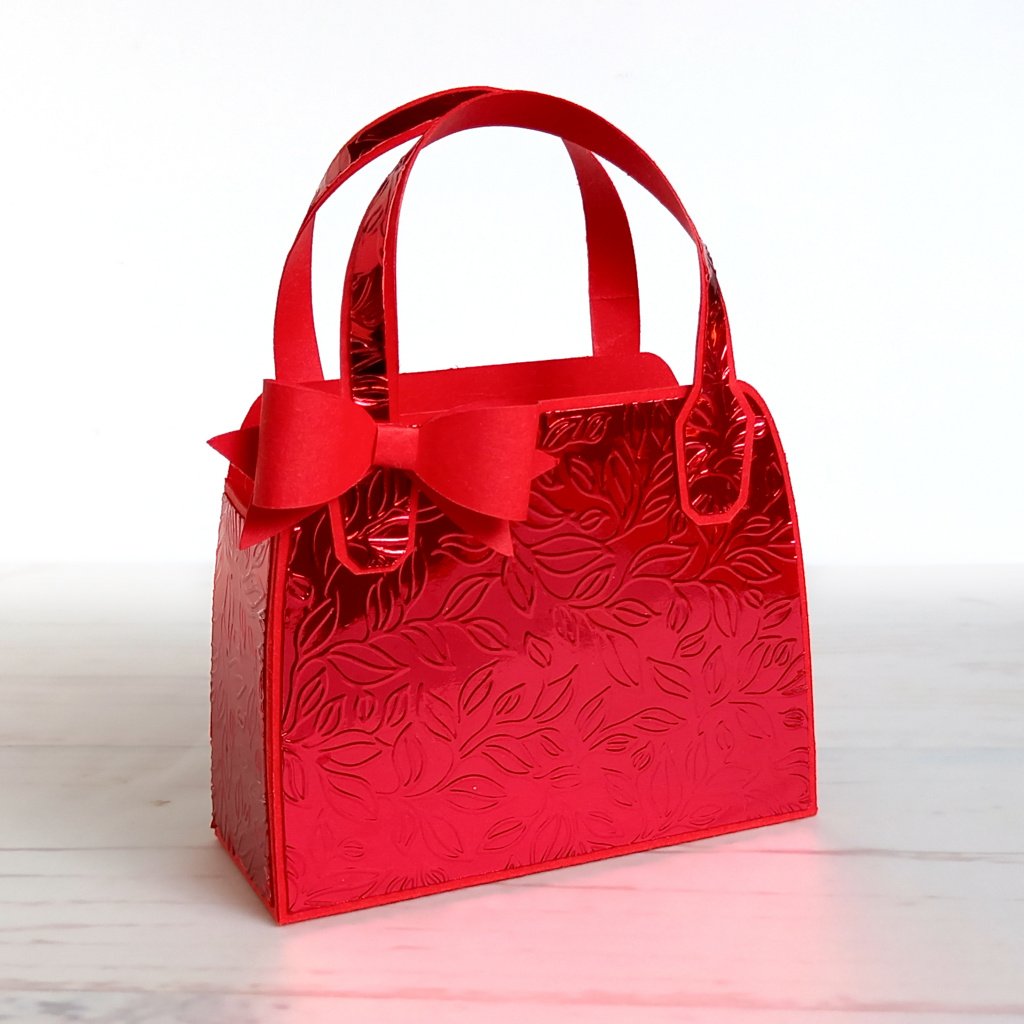
This red bag, along with its bow, also started life as a school book cover! I then cut all of the panels out of red mirror card and embossed them with a beautiful leaf design.
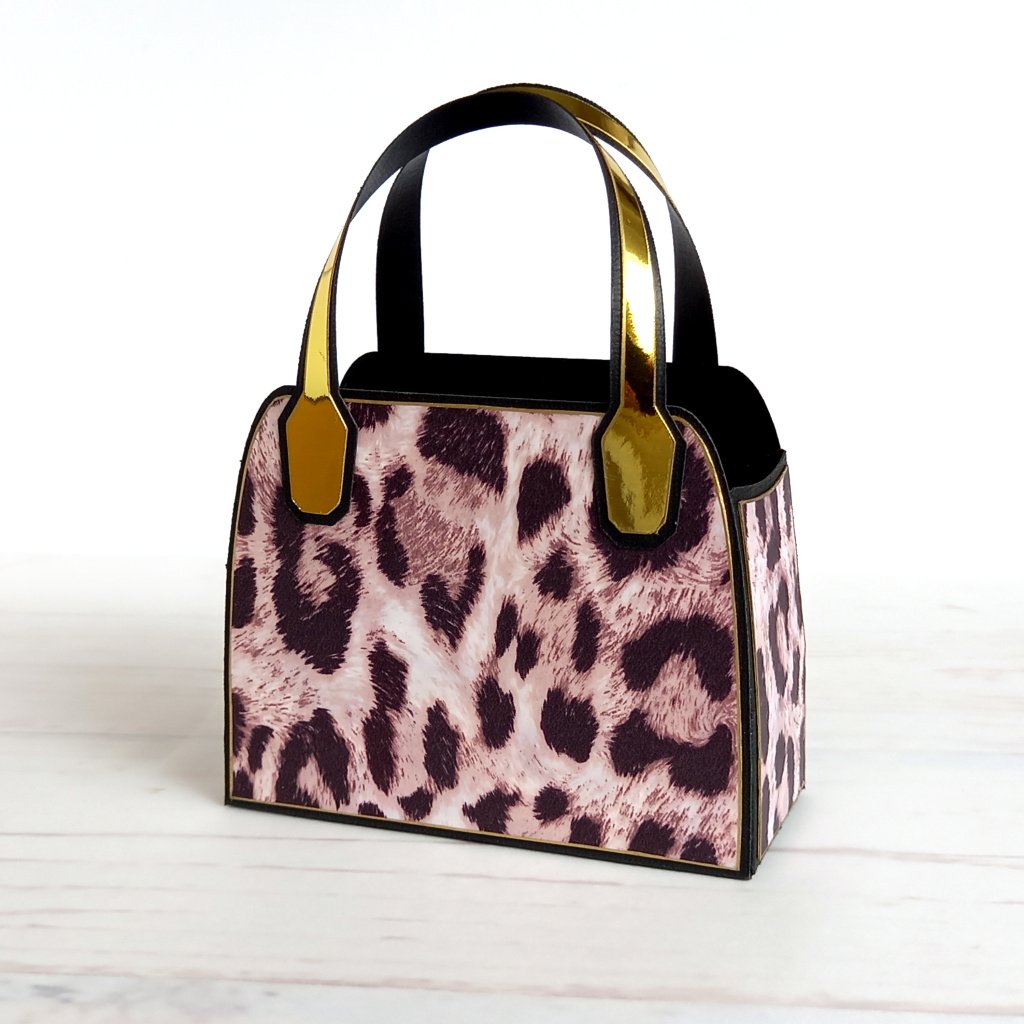
I cut the decorative panels on this black leopard print bag out of an old paper bag – you know, the ones you get from little gift shops. I first had to back the paper bag onto thin white card to give it some stability before cutting the panels out. I then ran a gold metallic marker pen around the edges, which perfectly compliments the gold mirror card handle panels.
Here’s all three of them together, looking absolutely gorgeous!
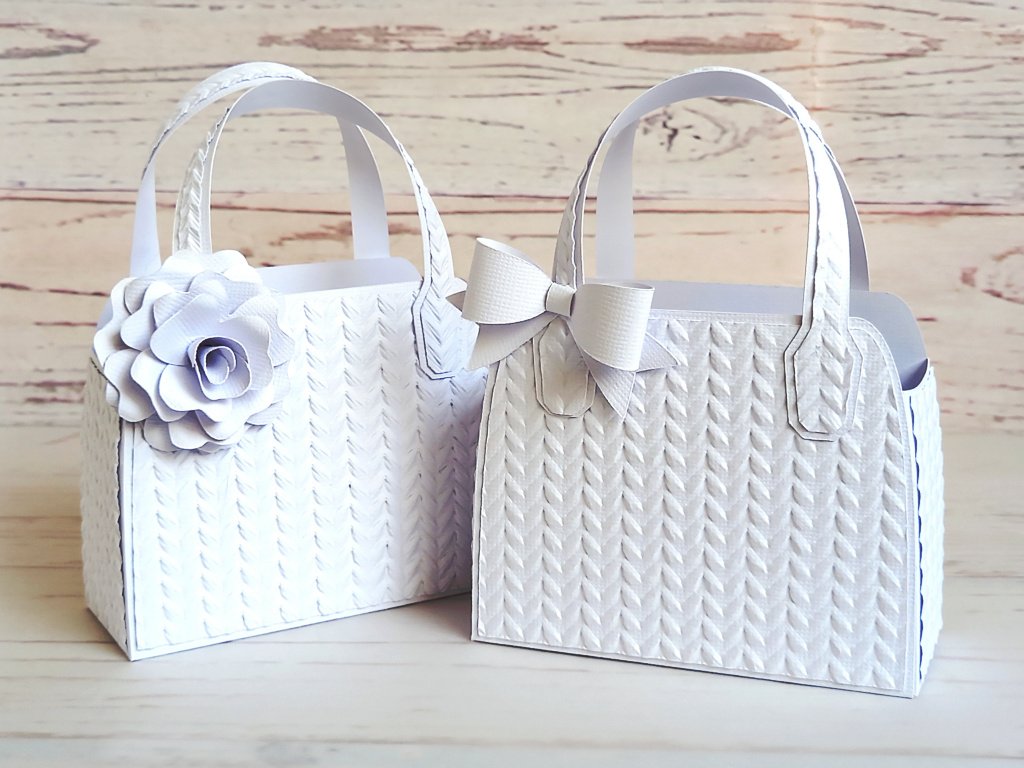
I created these two white bags from old textured cardstock that I’d taken from another project. Don’t they look amazing?! I love the look of white on white. There were a few imperfections on some of the panel pieces, so I embossed each of them using a knitted pattern design, which made them perfect! I then used the leftover scraps to make the little bow and the layered flower.
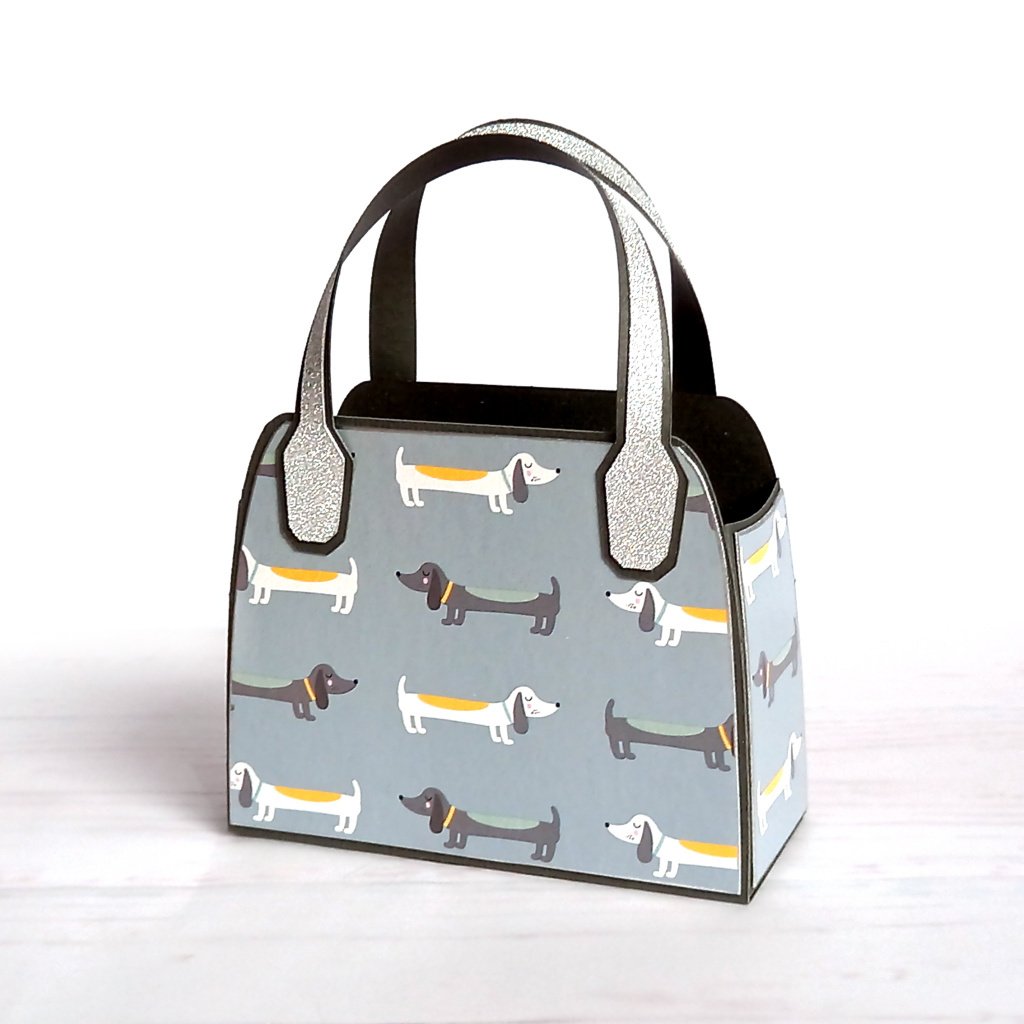
For this last bag, I cut the main black pieces out of an old art folder and the panels out of a tissue box. I cut the panels out by hand as I wanted to line the little dogs up so that the pattern was equal on both sides. I then ran a silver metallic marker pen around the edges and cut the handle panels out of silver glitter card to match.
Whilst not all of the bags are made entirely from upcycled materials, it was a good chance to use up some of my cardstock scraps and experiment with different textures.
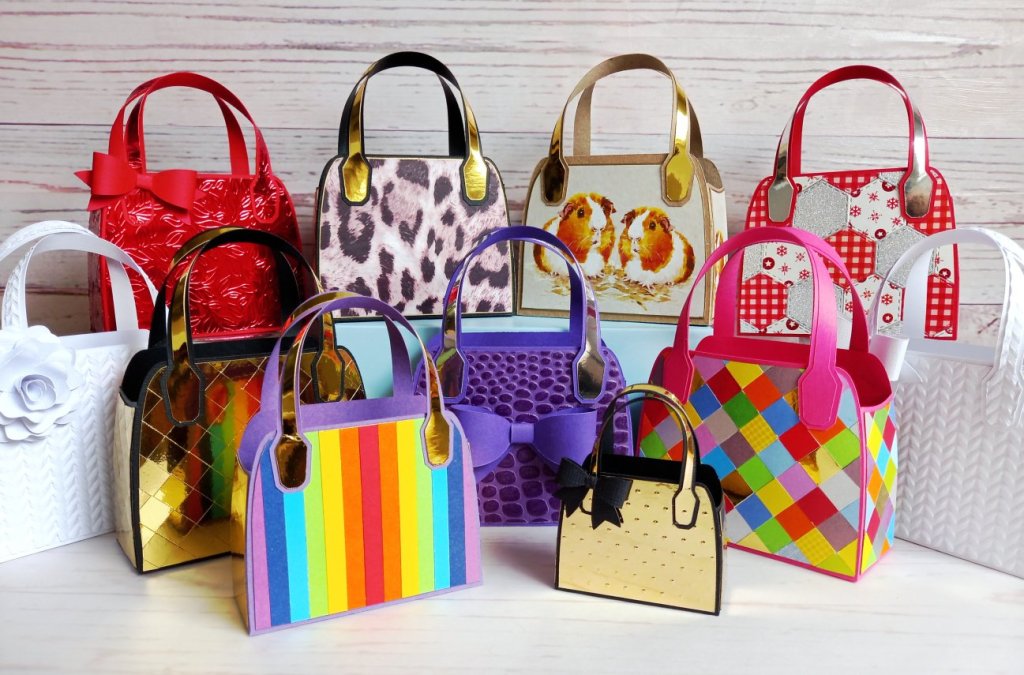
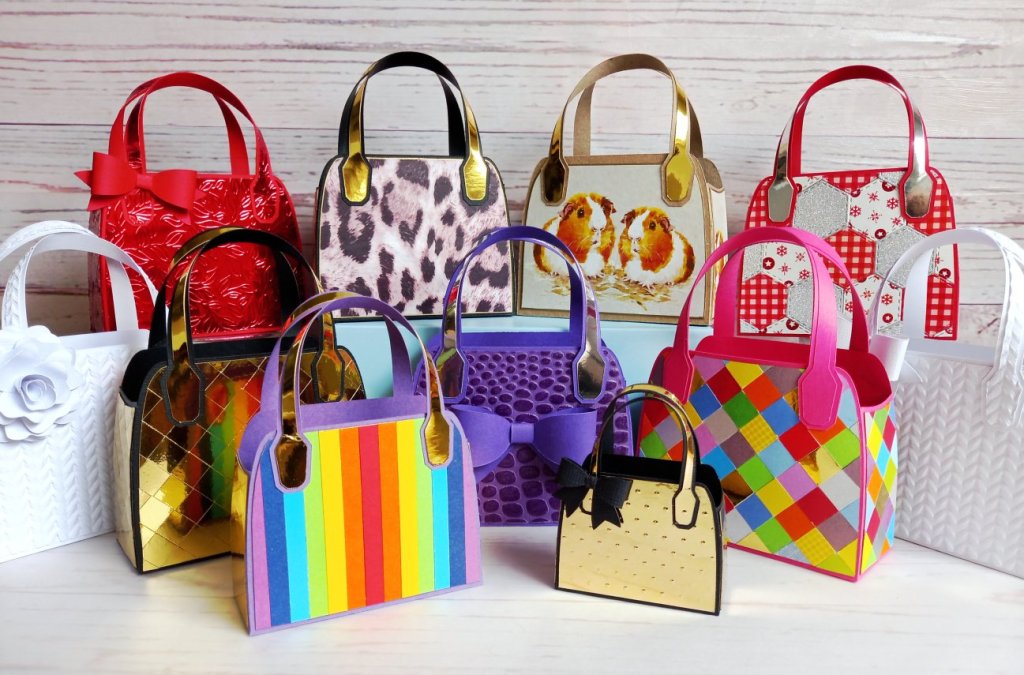
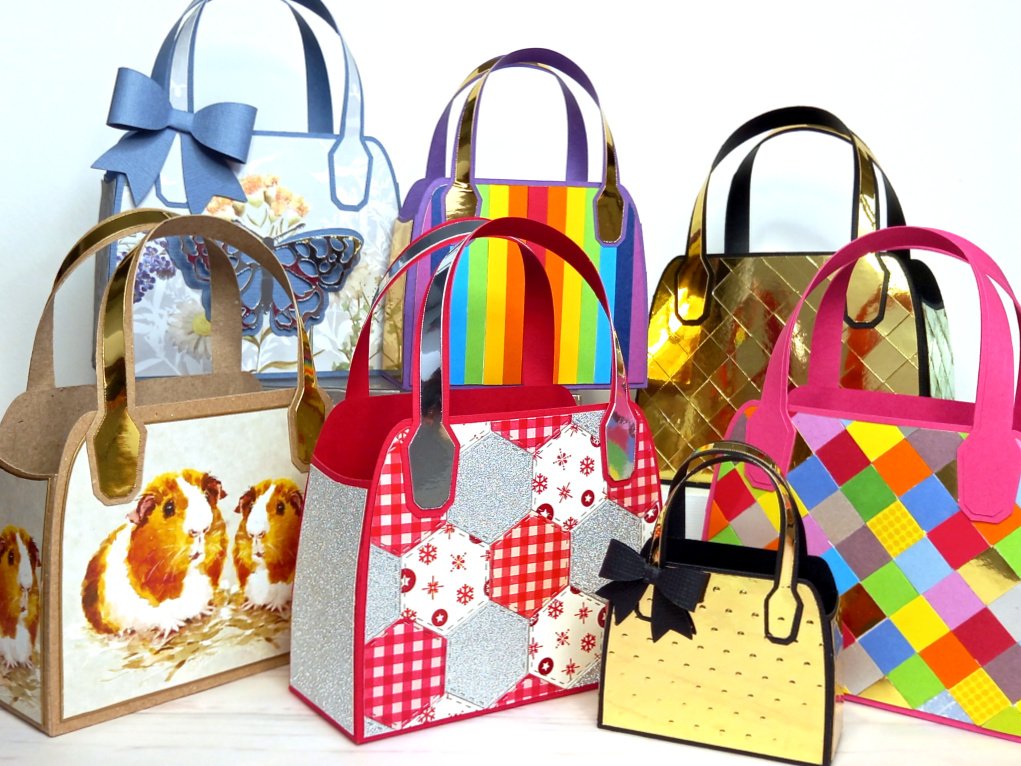
I’ve recently been experimenting with my butterfly favour bag template, seeing what other versions I could come up with, and just look at what I’ve created!
Aren’t they fabulous!?
Most of the bags are decorated with small paper scraps, and I upcycled old greeting cards, Christmas crackers and card packaging for the others ♻️
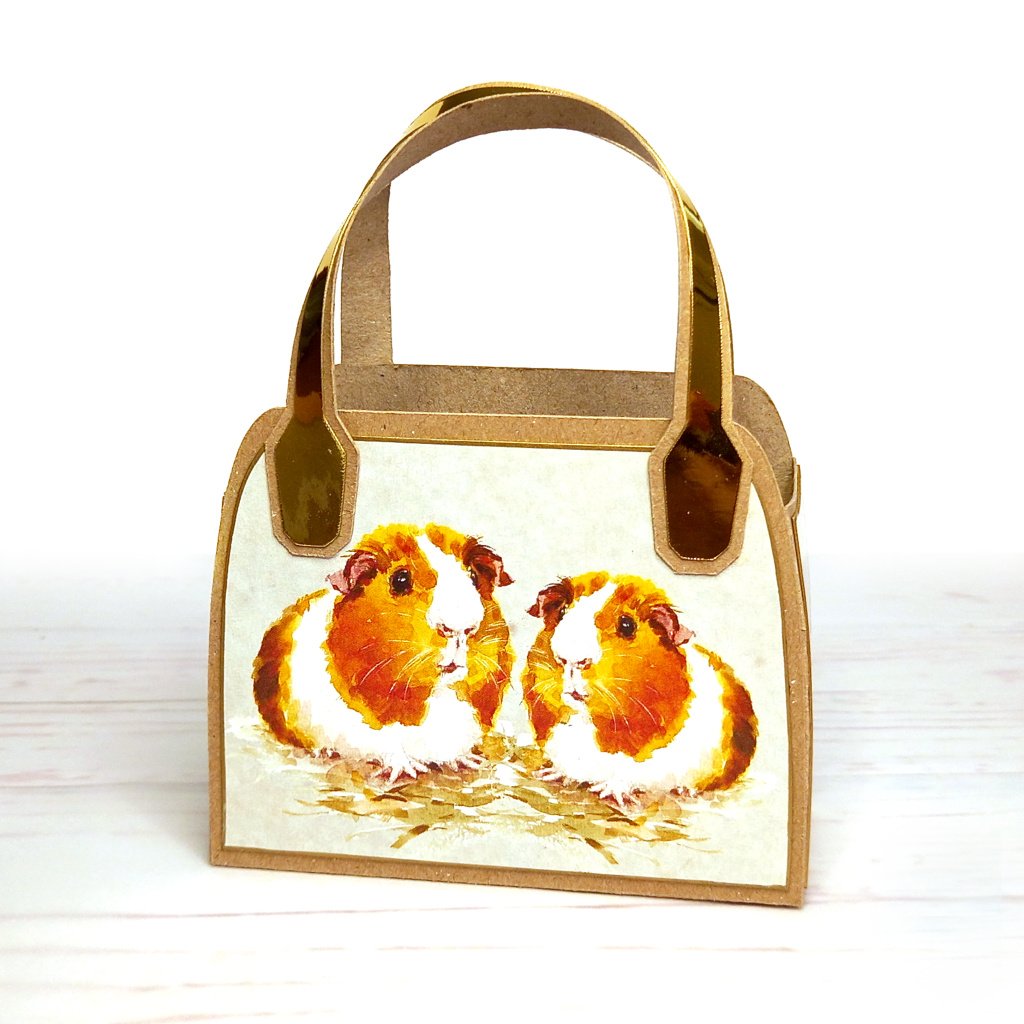
My favourite has to be the Guinea pig bag, made using a square tissue box.
I started by making the bag out of Kraft card, then I cut the front and back panels from the front and back of the tissue box and the two side panels from the picture on the base of the box. I drew around the edges of the panels with a gold metallic marker pen before gluing them on, then cut the handle panels from scraps of gold mirror card.
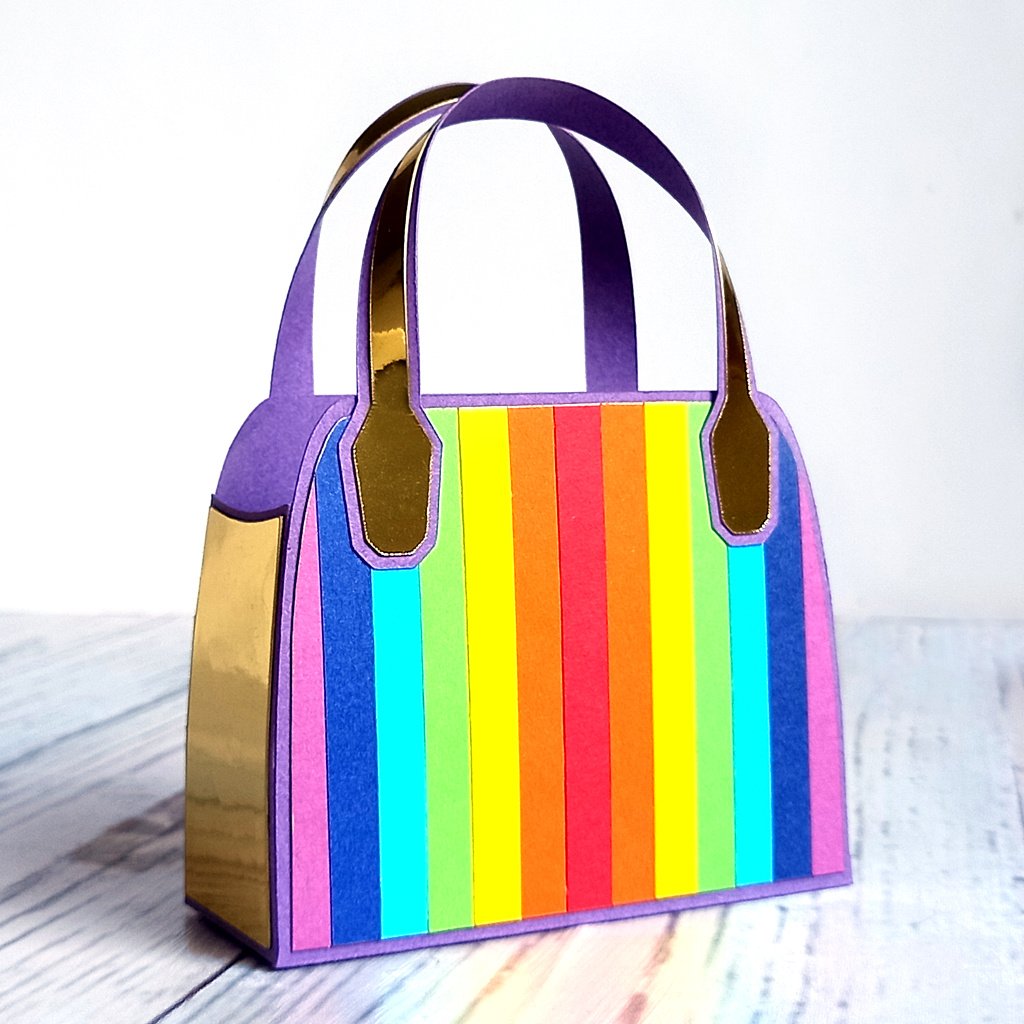
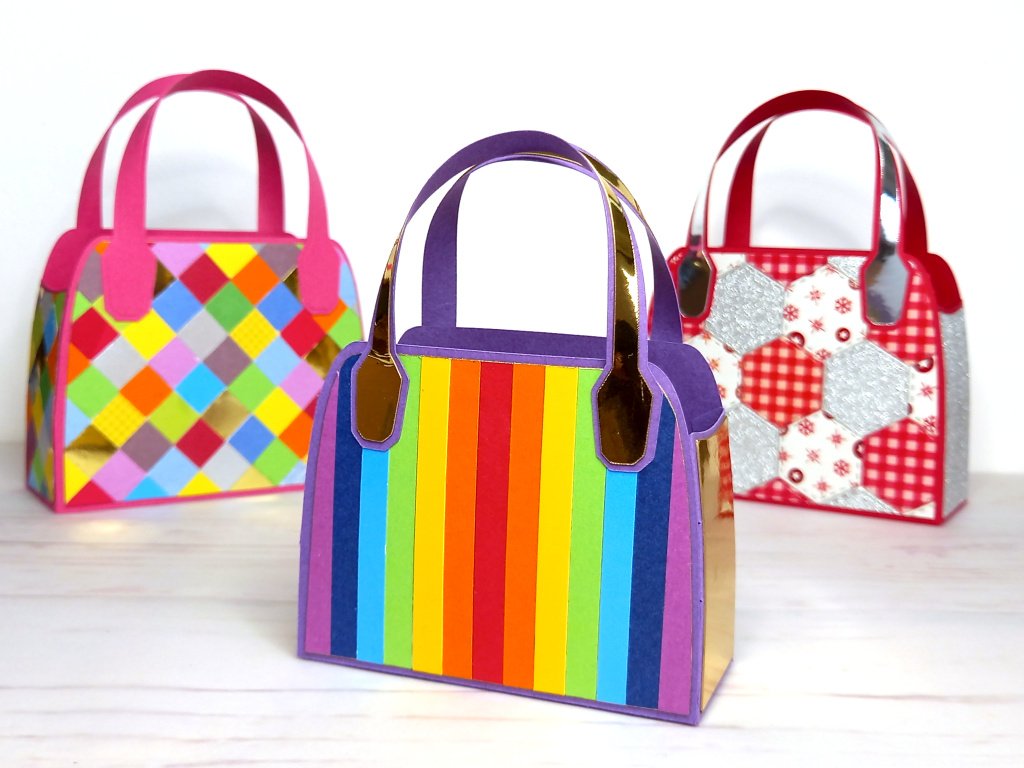
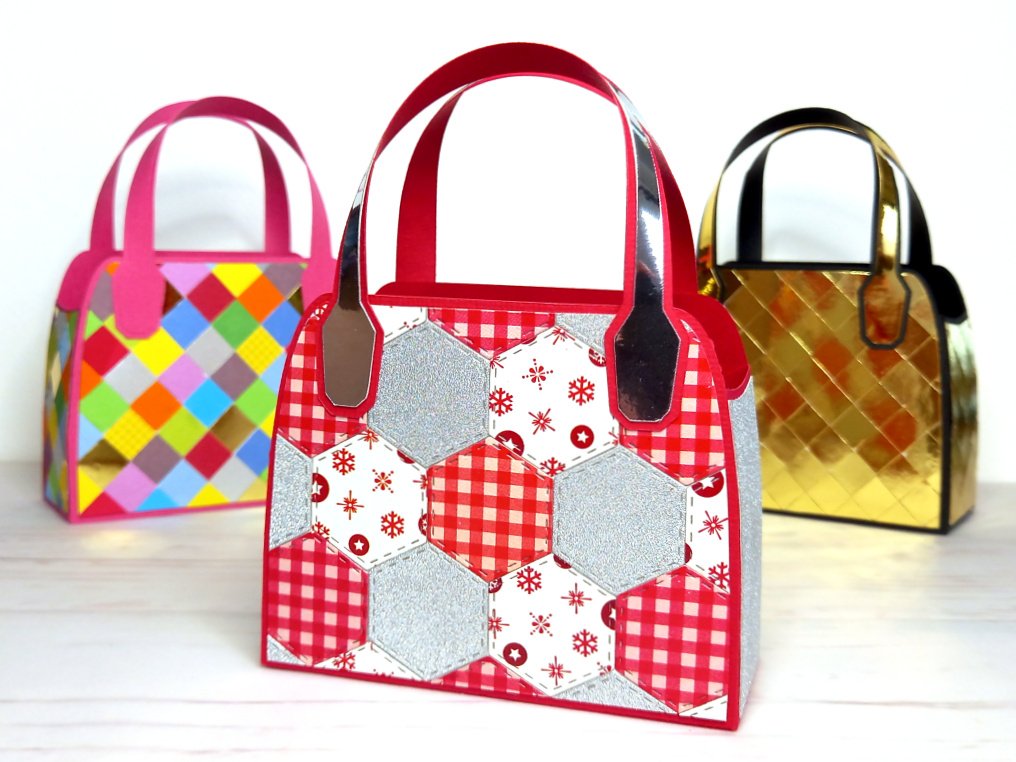
For this rainbow bag, I reduced the size of the template slightly and cut the main bag pieces out of an old school book cover. I then cut the front and back panels out of white copy paper. I found lots of different coloured cardstock scraps and cut them into thin strips. Then I glued the red strip down the centre of the front and back panels and filled the rest with the other colours. After trimming any ends off, I drew around the edges with a gold metallic marker pen, then cut the two side panels and the handle panels out of gold mirror card.
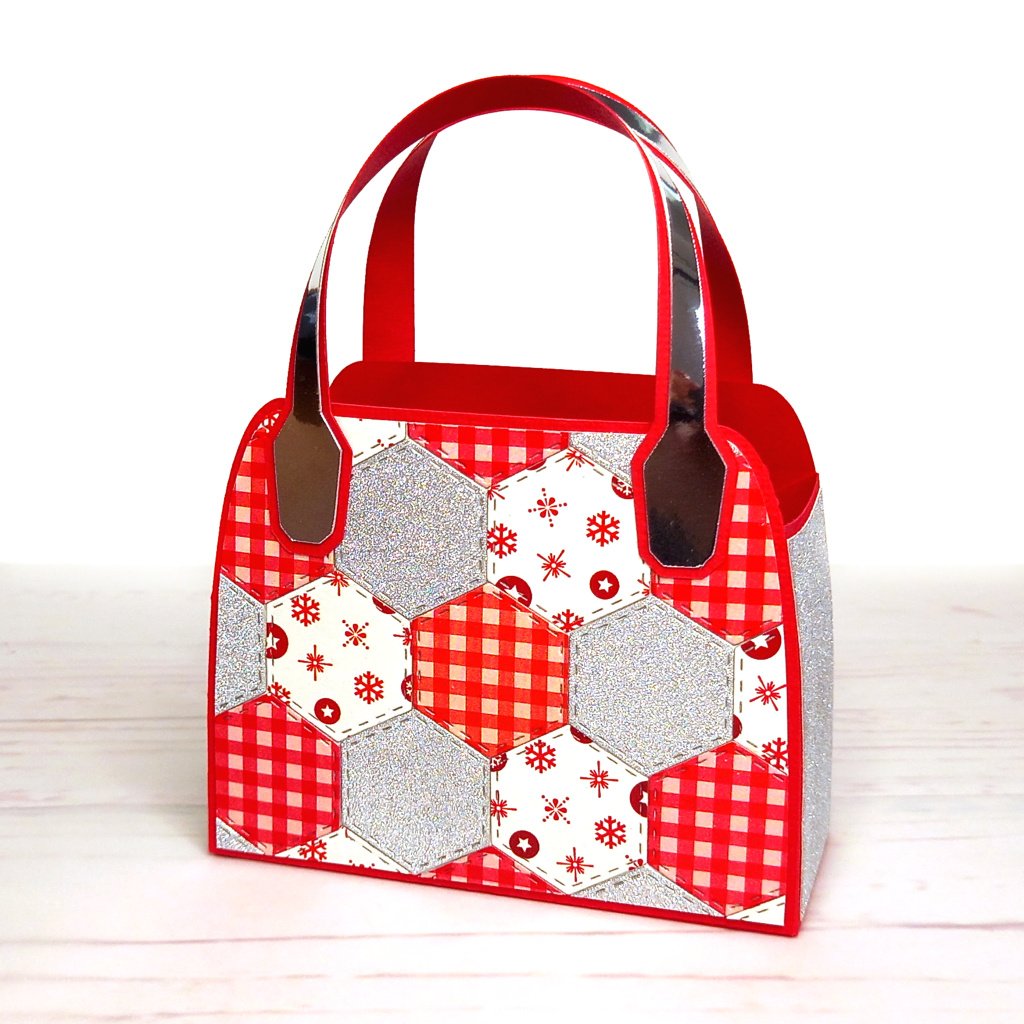
For this next one, I made the main bag out of red cardstock, then cut a front and back panel out of white copy paper. I die cut small hexagons from old Christmas crackers (that I had saved from a couple of years ago) and glued them onto the panels to make a patchwork effect. I then cut the two side panels out of a larger piece of glittery, silver cracker and cut the handle panels out of silver mirror card.
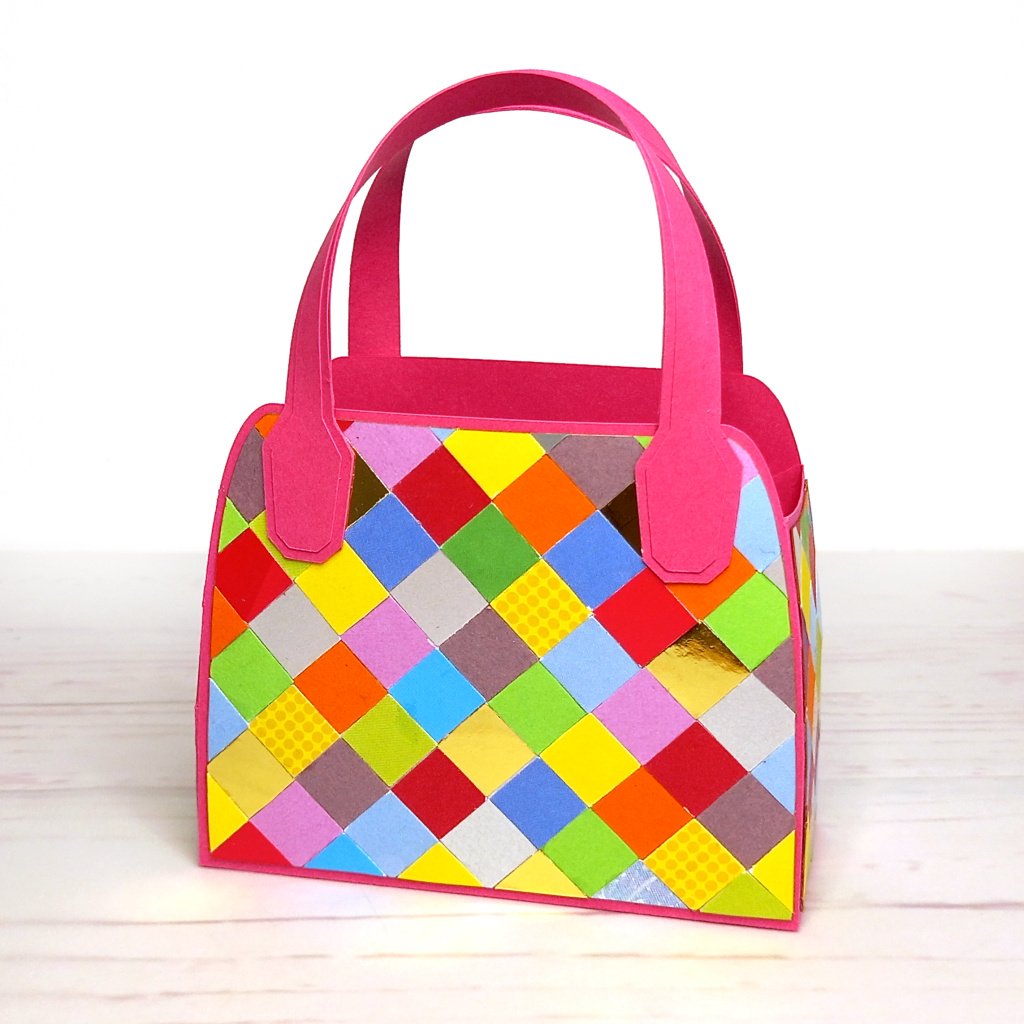
The pink card that I used for this next bag was an old A4 folder divider that I no longer needed. Again, I cut the front and back panels and two side panels from copy paper, then found lots of small scraps of cardstock, greeting cards and food packaging and punched out as many squares as I could using my 1.1cm square punch.
Call me obsessive, but I really wanted all of the edges to match up so that it looked like a candy wrapper bag, and here’s how the panels looked once I’d finished.
Before gluing them on, I ran the panels through my Big Shot to flatten them and it gave them a nice smooth finish.
I made this next one in a similar way, using scraps of gold mirror card. Running these panels through my Big Shot created almost a matt finish, and I drew around the edges with a gold metallic marker pen afterwards to hide the white core.
In this post, I will be answering some of the most frequently asked questions about using my digital files. I hope you find this information useful, but if you still have any questions, feel free to contact me through my Etsy shop and I will do my best to answer them.
Please note – all of my SVG files are tested in Cricut Design Space and are cut out using my Cricut Explore Air 2. I also cut out smaller versions (using the small dashed cuts SVG file) on my Cricut Joy. Results may vary with other cutting machines.
I have downloaded a zip folder, so how do I access the files?
All of the files are compressed within a zip folder to make downloading easier. If you right click on the zip folder, then go to ‘Extract All’ this will save the files into a new, accessible folder.
How do I upload the SVG files into Cricut Design Space?
Once you have Cricut Design Space open, click ‘New’ to create a new blank canvas. Then click ‘Upload’, then ‘Upload Image’ and ‘Browse’. You will then need to find the file that you want to work with.
There are two different SVG files. Which one do I use?
Most of my templates come as two different versions. One has solid score lines (_solid.svg), for cutting machines that can score, and one has the more traditional dashed lines, which your machine will cut out as small perforations. Select the version that you want to use, then click ‘Upload’, then ‘Add to Canvas’.
How do I resize my SVG files?
Firstly, make sure that everything on the canvas is selected, then either type in the measurement that you require in the size box (W ) or drag the resize arrow in the bottom right corner. Just make sure that the padlock icon is locked before you do this to ensure that all of the pieces stay in proportion.
How do I work with solid score lines?
If you are using one of my _solid.svg files you will need to select each of the score lines, then go to ‘Operation’ and change them from ‘Basic Cut’ to ‘Score’.
If you don’t have a digital cutting machine that can score, use the other .svg file, which will cut the score lines as small perforations.
Why are my score lines showing up on a separate mat?
Firstly, you will need to select the score lines, together with the piece that they need to be attached to, then click ‘Attach’.
This will ensure that the score lines are attached to the piece on the mat.
I have also created this short video tutorial, showing the entire process, which might help:
I don’t have a digital cutting machine. Can I still make your products?
Yes, in most cases you can! The majority of my templates include at least one PDF template that can be printed and cut out by hand. Please check the individual listings in my Etsy shop for more information.
How do I resize the PDF template?
If you wish to reduce the size of the PDF template, click on ‘Custom Scale’ within the printer properties box and enter the value that you need (eg; 75%).
If you wish to increase the size of the PDF template, click on ‘Poster’ and enter the value that you need (eg; 150%). This will spread the template over several pages, and will include an overlap. If you need the template a lot bigger, then you can take the file to a print shop.
What weight of cardstock do you recommend for your projects?
For construction, I recommend using about 240gsm cardstock (88lb), but generally anything around 220 – 250gsm (80 – 92lb) will work just fine. If you choose to make your project smaller, then a lighter (thinner) cardstock may be required. Similarly, if you choose to make your project bigger, then a heavier (thicker) cardstock may be required. For some of the decorative panels, a lighter card or paper 90 – 120gsm (30 – 44lb) will work best, but I will always state in the instructions if this differs.
Following on from my previous post, where I introduced you to my Tabby Cat Favour Boxes, I have now made a Black Cat version – perfect for Halloween treats!
Easy to assemble, you can make the cat head box in any colour you wish (it doesn’t have to be black) and adapt the colour of the eyes, nose and whiskers to match! Ideal as little table favours or for a cat-themed party, you can fill them with sweets, chocolates or small gifts.
Available from my Etsy shop, the template comes as an SVG cut file, as well as a PDF if you prefer to cut out by hand.
PLUS you get an optional extra white face patch to create a bi-colour cat face, like a tuxedo cat!
To make one of these cat boxes, you will need:
* Black Cat Favour Box template (SVG and PDF available) * Computer and printer to print the PDF templates and instructions * Double-sided, textured cardstock (220-250gsm / 80-92lb recommended) * Craft glue / double-sided tape
If you are not using a digital cutting machine, you will also need:
* Craft knife / scissors * Scoring tool * Ruler
Watch my video tutorial showing how to assemble the box and be sure to follow the tips below:
TIP 1 : After gluing the side panels on, gently curve the sides using your fingers or a bone folder before the glue dries. This will make assembling the box much easier and give it a neater finish.
TIP 2 : Instead of using plain black cardstock on the side panels, why not use a spooky halloween patterned paper! Here I’ve used a spider web design on the box on the left.
TIP 3 : Make sure that the (grey) whiskers / mouth panel and the (black) eyes panel completely cover the cut out sections. They should line up like this:
The cat box measures approximately 11cm (W ) x 9.5cm (H) x 4cm (D) / 4.3″ (W ) x 3.74″ (H) x 1.6″ (D), however, this is only meant as a guide, as the templates can easily be re-sized to suit your needs.
I hope that I have now inspired you to create your own little cat favour boxes (whether black or tabby) and I can’t wait to see what you fill them with!